

By Dr Nick Barnett, February 2025
NIREOS now manufacture a range of HERA hyperspectral cameras based on their Fourier Transform technology. These cameras allow for simultaneous high spectral and spatial resolution measurements across the visible, NIR and SWIR ranges. The HERA VIS-SWIR, the most recent addition to the HERA family, covers 400nm to 1700nm.
The extended HERA family of cameras is finding a wide range of innovative applications across various fields. Researchers at the Istituto Italiano di Tecnologia have utilised the HERA VNIR camera, integrated with a microscope, to investigate tin halide perovskites (Figure 1). This research focuses on understanding how surface chemistry interacts with environmental factors to drive the degradation of perovskites, providing valuable insights into improving their stability and performance. The same VNIR camera has also been employed in diverse applications such as characterising silicon wafers for semiconductor manufacturing and analysing pigments in ancient illuminated manuscripts, contributing to the preservation and understanding of historical artifacts.
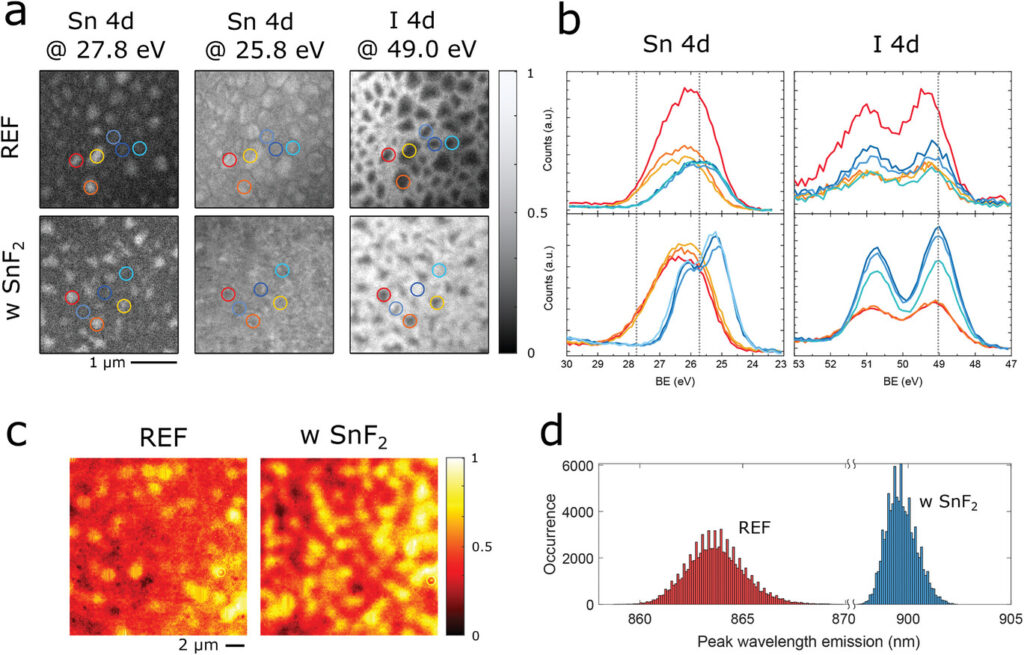
Figure 1. Chemical and photoluminescence mapping of pristine and SnF2-containing THP thin films. See the full article for further details
The HERA SWIR and eSWIR cameras extend the spectral range, enabling advanced capabilities in applications such as recycling plastics, where precise material identification is critical for efficient sorting; drug identification (Figure 2), supporting pharmaceutical research and quality control; and food analysis, enhancing the detection of contaminants and ensuring product quality.
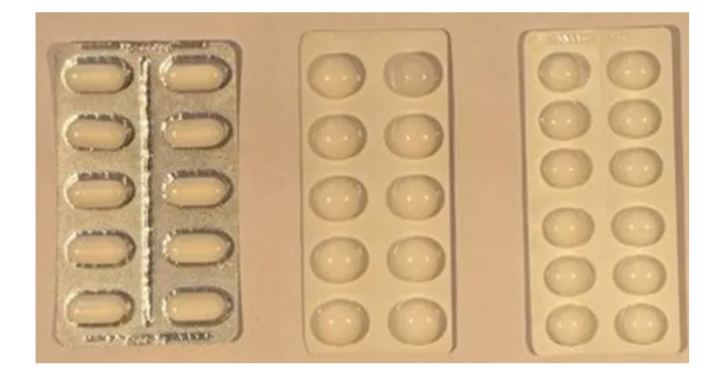
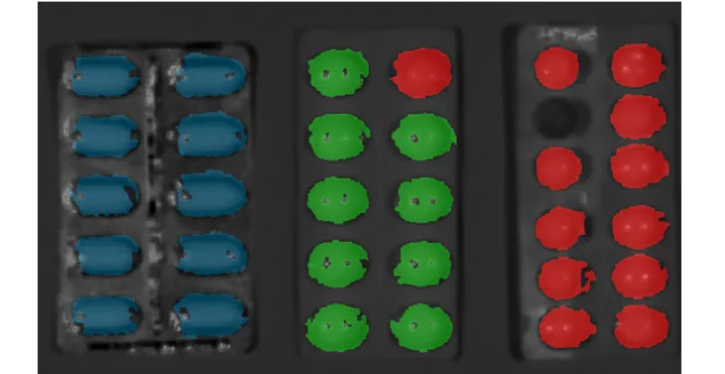
Figure 2. All of the pills inside have the same active ingredient (ibuprofen) but with different concentrations.
Among the latest developments, early studies leveraging the broad spectral coverage of the new HERA VIS-SWIR camera have shown promising results in medical imaging (Figure 3 and 4). Notably, this technology is opening up new frontiers in real-time tumour characterisation, which could revolutionise diagnostics and surgical precision. These advancements highlight the versatility and transformative potential of the HERA camera family across science, industry, and healthcare.
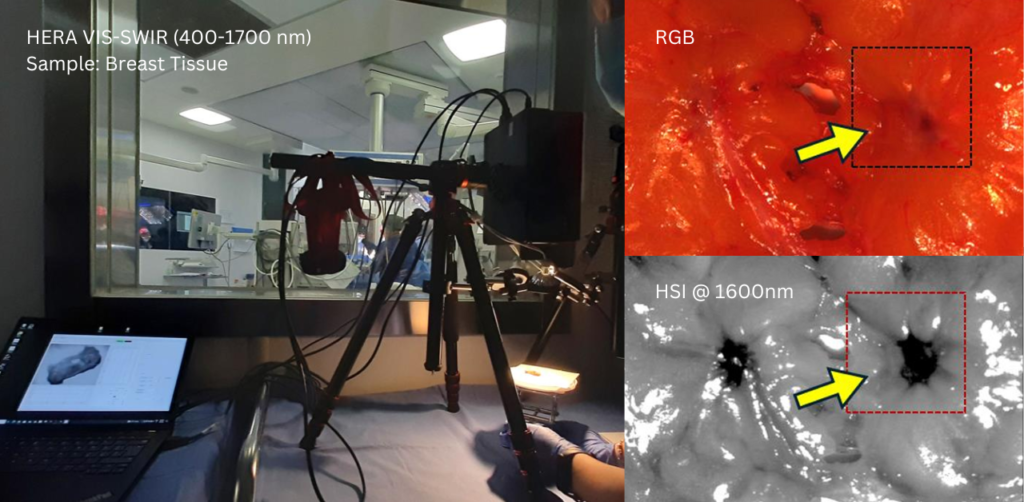
Figure 3. Tumour Detection
Device: HERA VIS-SWIR (400-1700 nm); Sample: Breast Tissue (the specimen is not stained); Illumination: 35 watt halogen lamp; Goal: detect tumour “ex-vivo” during surgery in diffuse reflectance configuration. The European project ‘Spectra Breast’.
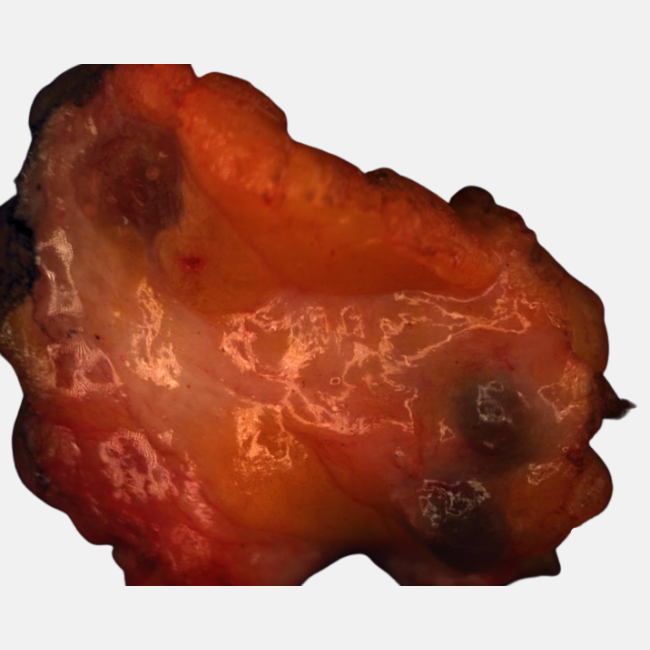
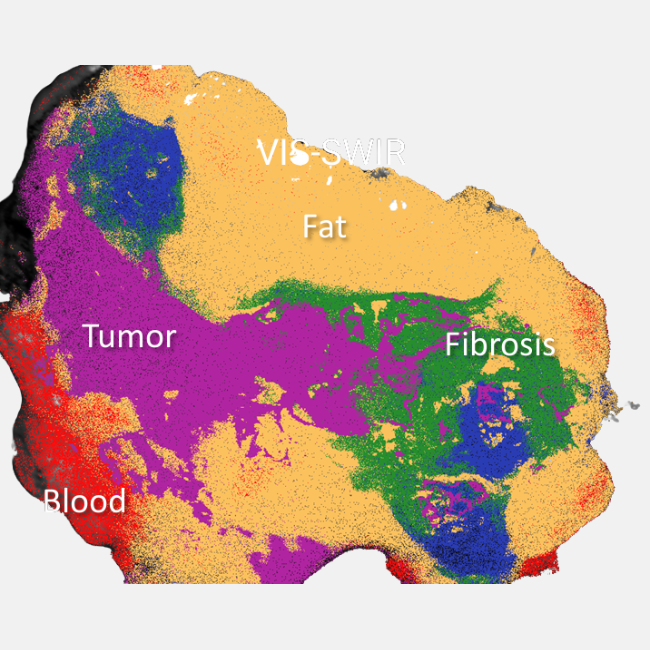
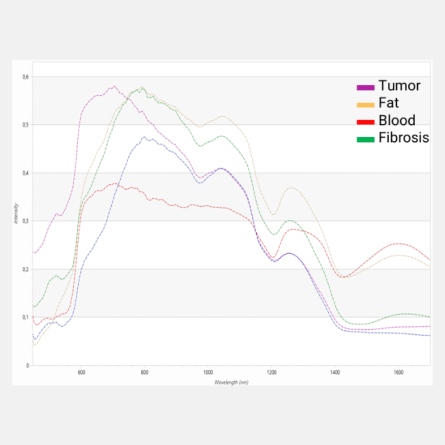
Figure 4. Tumour Detection
Segmentation Algorithm: SpectralAngle Mapper (SAM) and the reflectance spectra, Hera 400-1700nm
Visit our product page for more information or use the button below to contact us directly.


