 High-Resolution Panoramic View – Velox
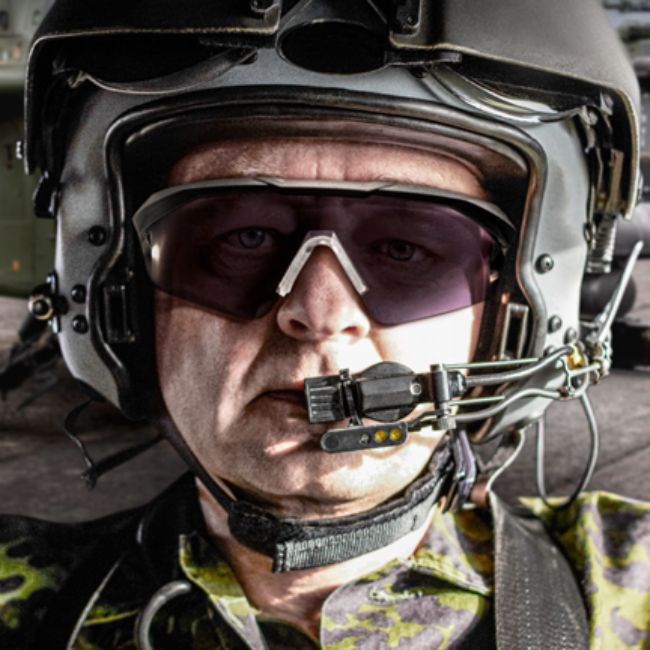
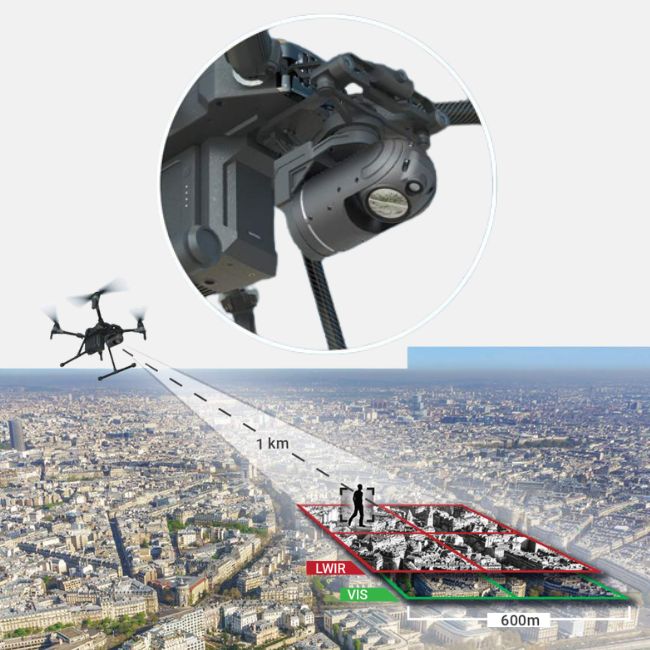
Velox is an advanced miniature gyro-stabilised EO/IR payload designed for high-performance aerial surveillance and situational awareness in aerospace and defence applications. Featuring a compact 2-axis architecture, it combines a high-resolution 12.3 MP visible camera with a 640×512 uncooled thermal imager, enabling reliable operation in both daylight and low-light conditions. Its closed-loop stabilisation system, supported by gyroscopes and encoder feedback, achieves line-of-sight stability down to 80 µRad, ensuring sharp, blur-free imaging even under high dynamic motion and vibration. Integrated with modern control and data interfaces, including Mavlink via Nvidia NX and MIPI CSI-2 and USB connectivity, Velox provides a flexible and efficient solution for airborne platforms requiring precision sensing, tracking, and environmental awareness.
Velox in Aerospace Applications:
 Precision Motion Hexapod Systems for Defence & Security
Hexapod motion systems are advanced multi‑axis positioning platforms designed for high‑precision defence and security applications. Based on a parallel kinematic architecture, they provide six degrees of freedom (X, Y, Z, pitch, roll, yaw), enabling precise, coordinated movement with exceptional accuracy, stiffness, and repeatability.
These systems are engineered to support demanding operational environments, offering compact design, high load capacity, and reliable performance for critical alignment, testing, and simulation tasks. Suitable for integration in laboratories, field deployment setups, and controlled environments, hexapods enable accurate positioning and dynamic motion control of complex defence systems, sensors, and components.
Hexapods in Defence and Security Applications:
Sensor and Payload Alignment – Hexapods enable precise positioning and alignment of surveillance sensors, radar systems, electro‑optical payloads, and communication equipment, ensuring optimal performance prior to deployment.
Optical and Directed Energy System Alignment – High‑precision multi‑axis control supports the alignment of advanced optical systems, including imaging devices, targeting systems, laser systems, and photonic technologies where micron‑level accuracy is required.
Calibration of Navigation and Inertial Systems – Hexapod platforms can support calibration and testing of inertial measurement units (IMUs), gyroscopes, and navigation systems by delivering controlled and repeatable multi‑axis motion profiles.
Simulation and Motion Reproduction – The systems enable reproduction of realistic motion scenarios to simulate vehicle dynamics, platform movement, or operational conditions, supporting validation of defence equipment and subsystems.
Testing and Validation of Defence Components – Hexapods enable precise positioning within test setups, supporting functional testing, performance validation, and integration of mission-critical components under controlled conditions.
Unmanned Systems Development (UAV/UGV/USV) – Multi-axis motion control can support development and testing of unmanned systems by simulating operational movement and providing accurate positioning for onboard sensors and payloads.
Radar and Antenna Alignment – High stiffness and repeatability enable accurate positioning of antennas and radar systems, supporting beam alignment, calibration, and testing processes.
Electronic Warfare and Signal Testing – Hexapods can support controlled positioning of systems during RF, electronic warfare, and signal testing scenarios where spatial accuracy is critical.
Environmental and Laboratory Integration – Designed for integration within environmental test chambers and laboratory setups, hexapods enable stable positioning during thermal, vibration, and performance testing.
Flexible Multi‑Platform Integration – These systems are engineered for integration across laboratory, mobile, and field-based platforms, enabling consistent high‑precision positioning across a wide range of defence and security applications.
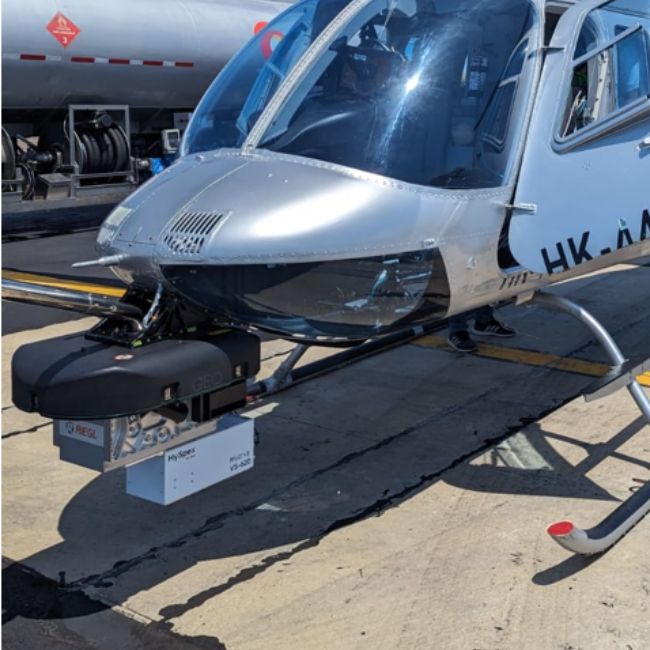
Our hyperspectral imaging solutions deliver advanced sensing capabilities for defence and security operations, combining high-resolution imaging with detailed spectral analysis. By capturing data across hundreds of contiguous wavelength bands, these systems enable accurate material detection, identification, and classification far beyond conventional electro‑optical technologies.
Designed for operational flexibility, these solutions integrate both high-performance pushbroom systems and compact snapshot hyperspectral cameras, enabling deployment across airborne, UAV, and mobile platforms. With robust design, high radiometric accuracy, and real‑time or near‑real‑time data capabilities, they support reliable performance in dynamic and demanding environments such as surveillance, reconnaissance, and threat detection.
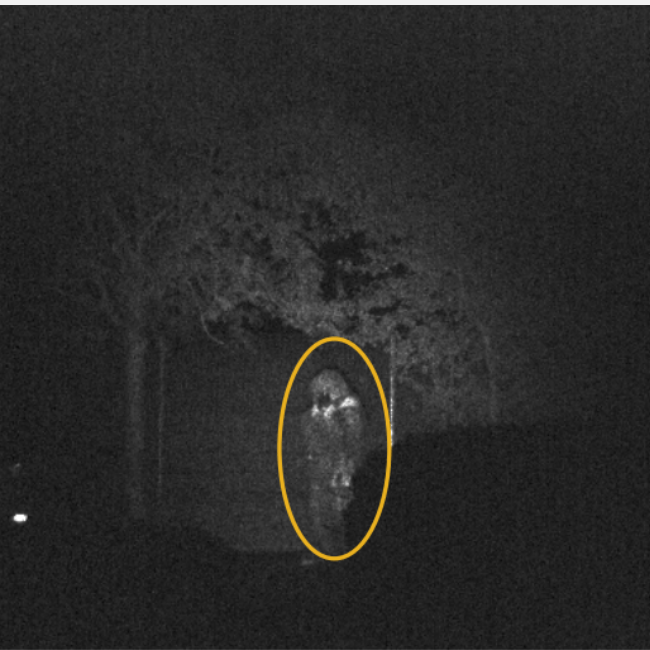
Intelligence, Surveillance, and Reconnaissance (ISR) – Hyperspectral imaging enables enhanced situational awareness by distinguishing materials and objects based on unique spectral signatures, supporting improved detection and analysis in complex operational environments.
Explosive and Hazardous Material Detection – The technology can support stand‑off detection and identification of explosives, chemical agents, and hazardous substances through spectral fingerprinting, improving risk assessment and response capabilities.
Camouflage and Concealment Detection – Advanced spectral analysis enables the identification of concealed or disguised objects that may not be visible with standard imaging, supporting detection of hidden equipment or disturbances.
UAV‑Based and Mobile Surveillance – Compact snapshot hyperspectral cameras are optimised for integration with unmanned aerial systems (UAS/UAVs), enabling rapid data acquisition without motion distortion and supporting agile deployment in time‑critical missions.
Airborne Wide‑Area Monitoring – High-resolution hyperspectral systems can support airborne platforms in capturing detailed datasets for large-area surveillance, mapping, and reconnaissance operations.
Border and Maritime Security – Hyperspectral imaging enables monitoring of coastlines, territorial waters, and border regions, supporting detection of environmental anomalies, unauthorised activities, and material changes across wide areas.
Forensic and Post‑Event Analysis – Rich spectral datasets can support detailed investigation of incident sites, enabling identification of residues, surface changes, and material composition.
Environmental and CBRN Monitoring – The technology can support detection and mapping of chemical, biological, radiological, and environmental anomalies, enabling improved situational awareness and risk mitigation.
Critical Infrastructure Monitoring – Continuous hyperspectral monitoring enables assessment of key infrastructure such as pipelines, transport networks, and industrial facilities, supporting early detection of leaks, contamination, or abnormal changes.
Flexible Multi‑Platform Deployment – Solutions are designed for seamless integration across UAVs, crewed aircraft, vehicles, and fixed installations, combining high‑precision pushbroom systems with compact snapshot cameras to ensure optimal performance across diverse mission profiles.
 Imaging Photometers for Defence Display & Lighting Testing Applications
Imaging photometers and colorimeters from Westboro Photonics are high-precision optical measurement systems designed for defence applications where accurate luminance, colour, contrast and uniformity measurements are essential. Used with Photometrica image analysis software, these systems provide fast, repeatable and spatially resolved data for testing military displays, illuminated controls, panels, indicators and lighting systems.
Westboro Photonics solutions support defence manufacturers, system integrators and test engineers throughout research, development, qualification and production. By combining calibrated imaging, advanced software and high-accuracy measurement capabilities, they help ensure that mission-critical visual systems remain readable, consistent and reliable in demanding operational environments.
Military Display and Control Interface Testing – Imaging photometers are used to measure luminance, chromaticity, contrast and uniformity of mission displays, operator consoles, instrument panels and tactical control interfaces. These measurements help ensure that critical visual information remains clear and readable across varied lighting conditions.
Head-Up Display and Helmet-Mounted Display Evaluation – Westboro Photonics systems support optical performance testing of head-up displays, helmet-mounted displays and near-eye systems. They enable accurate assessment of brightness, colour, image uniformity, clarity and contrast for defence platforms where visual performance is mission-critical.
Backlit Panels, Switches and Graphics Measurement – Military vehicles, aircraft, naval systems and command environments rely on illuminated switches, panels and legends for safe operation. Westboro imaging systems help verify luminance distribution, character visibility, colour consistency and graphic uniformity across illuminated components.
NVIS and Low-Light Display Performance – For night operations, displays and illuminated components must remain visible without compromising operator night vision. Imaging photometers and colorimeters can support evaluation of dimming behaviour, low-light readability, spectral performance and night-vision-compatible illumination.
Light Plate Balancing and Uniformity Testing – Westboro Photonics software tools, including light plate balancing capabilities, help optimise brightness distribution across illuminated panels and displays. This supports consistent visual performance and helps reduce visible non-uniformities in defence lighting and display systems.
Imaging Spectral Colorimeter Testing – For applications requiring both high-accuracy spectral measurement and spatial imaging data, Westboro’s imaging spectral colorimeters combine spot spectroradiometer performance with calibrated imaging colorimetry. This is especially useful for detailed display, lighting and colour performance evaluation.
Exterior and Tactical Lighting Assessment – Defence platforms require reliable lighting for identification, signalling, safety and operational awareness. Imaging photometers can be used to characterise beam patterns, intensity distribution, luminance and colour performance of exterior and tactical lighting systems.
R&D, Qualification and Production Testing – Using Photometrica software, Westboro Photonics systems streamline optical testing workflows, reduce measurement time and provide repeatable, data-driven results. This supports defence testing from early-stage development through compliance, qualification and production environments.
In defence applications, displays and lighting systems must perform reliably in complex and changing environments. Westboro Photonics imaging photometers, colorimeters and analysis software help defence manufacturers validate readability, uniformity, colour accuracy and optical performance, supporting safer operation and improved mission readiness.
Modern defence operations depend on advanced imaging and sensing technologies for intelligence gathering, surveillance, target acquisition, navigation, and threat detection. To ensure these systems deliver accurate and reliable data, sensors must be carefully characterised and calibrated against known optical standards.
Pro‑Lite, in partnership with Labsphere, provides calibration solutions that enable defence organisations, aerospace contractors, and system developers to evaluate, validate, and optimise sensor performance throughout development, testing and deployment.
Defence platforms increasingly rely on visible, infrared, multispectral and hyperspectral imaging systems to operate effectively in challenging environments. Accurate calibration ensures these sensors provide consistent measurements, improved image quality, and reliable target detection capabilities.
Labsphere’s integrating sphere technology produces highly uniform illumination for sensor calibration and performance testing. These systems enable repeatable measurements and controlled test conditions for defence imaging programs.
Capabilities include:
Defense sensors operating on aircraft, high-altitude platforms and satellites are exposed to demanding environmental conditions that can affect performance. Labsphere calibration systems help developers characterie sensor behavior before deployment, supporting confidence in mission-critical data collection and analysis.
The effectiveness of modern defence systems depends on the quality of the information collected by their sensors. Through advanced calibration technologies, integrating sphere systems, and radiometric measurement solutions, Labsphere helps defence organisations achieve the accuracy, consistency, and measurement confidence required for today’s most demanding imaging and sensing applications.
 Precision Optical Detection for Defence Applications
Modern defence systems depend heavily on advanced photonic technologies to deliver precision, speed, and reliability in critical environments. Photodetectors from GPD play a key role across a wide range of military and aerospace applications, enabling the accurate detection, measurement, and conversion of optical signals into actionable data.
From surveillance and targeting to communication and sensing, defence operations require photodetectors that can perform consistently in harsh, high-risk, and mission-critical conditions. GPD photodetectors are engineered for high sensitivity, fast response times, and robustness, ensuring reliable operation across land, air, and maritime platforms
Photodetectors are integral to many advanced defence technologies, including:
LIDAR and laser rangefinding systems
Target acquisition and tracking
Infrared (IR) sensing and thermal imaging
Free-space optical and secure communication systems
Intelligence, Surveillance, and Reconnaissance (ISR) platforms
These applications demand components capable of detecting extremely low light levels while maintaining accuracy in high-speed and high-noise environments.
Avalanche Photodiodes (APDs) – APDs provide high sensitivity and internal gain, making them ideal for long-range detection and low-light applications such as LIDAR, laser radar, and rangefinding systems used in defence operations.
PIN Photodiodes – PIN photodiodes offer fast response times and excellent linearity, supporting high-speed optical communication systems and precise signal detection in mission-critical environments.
High-Speed Photodetectors – Designed for applications requiring rapid signal capture, high-speed photodetectors enable real-time data acquisition in communication, targeting, and tracking systems.
Infrared (IR) Detection Capabilities – Infrared-sensitive photodetectors support thermal imaging, night vision, and covert sensing applications, allowing defence systems to operate effectively in low-visibility or night-time conditions.
Defence applications require photodetectors that maintain performance under extreme conditions, including:
Robust packaging, advanced materials, and precision engineering ensure reliability in even the most demanding operational settings.
Every defence system has unique requirements. Custom photodetector solutions can be developed to meet specific needs, including:
These tailored solutions ensure seamless integration into complex defence systems while maintaining optimal performance.
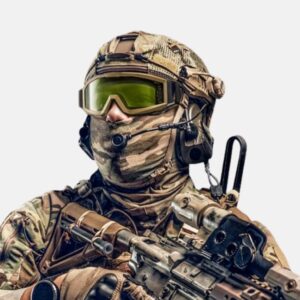
Laser safety is critical in aerospace and defence environments, where high-power laser systems are increasingly used in applications such as LIDAR, laser communication, targeting, and materials processing. Effective laser safety solutions are essential to protect personnel, ensure regulatory compliance, and maintain safe operation in both laboratory and production settings. A comprehensive approach to laser safety includes personal protective equipment, engineered controls, and training, all tailored to the specific laser wavelengths, power levels, and operational environments involved.
Laser Safety in Aerospace Applications:
Laser Safety Eyewear (Goggles) – Provides certified protection against specific laser wavelengths used in aerospace systems, ensuring operator safety during alignment, testing, and operation of laser equipment.
Laser Safety Windows, Curtains and Enclosures – Installed in laboratories, test facilities, and cleanrooms to allow safe observation of laser processes while preventing hazardous exposure to laser radiation.
Large Area Laser Protection – Includes curtains, barriers, and shielding solutions designed to secure entire workspaces, particularly in integration and test environments where high-power or open-beam systems are used.
Laser Laboratory and Facility Safety Design – Supports the implementation of controlled environments, ensuring compliance with laser safety standards while maintaining operational efficiency in aerospace R&D and production facilities.
Laser Safety Training – Provides essential knowledge for engineers, technicians, and safety officers, covering hazard identification, safe working practices, and regulatory requirements for laser use in aerospace applications.
Custom Safety Solutions – Tailored laser safety configurations designed to meet specific system requirements, including unique wavelengths, high-power applications, and specialised aerospace testing setups.
 Integrated Test Solutions for Mission-Critical Defence Sensors
Modern defence platforms depend on advanced electro-optical and infrared sensor systems for targeting, navigation, surveillance, tracking and situational awareness. To ensure these systems perform reliably in operational environments, they require accurate, repeatable and efficient testing across development, production, depot maintenance and field support.
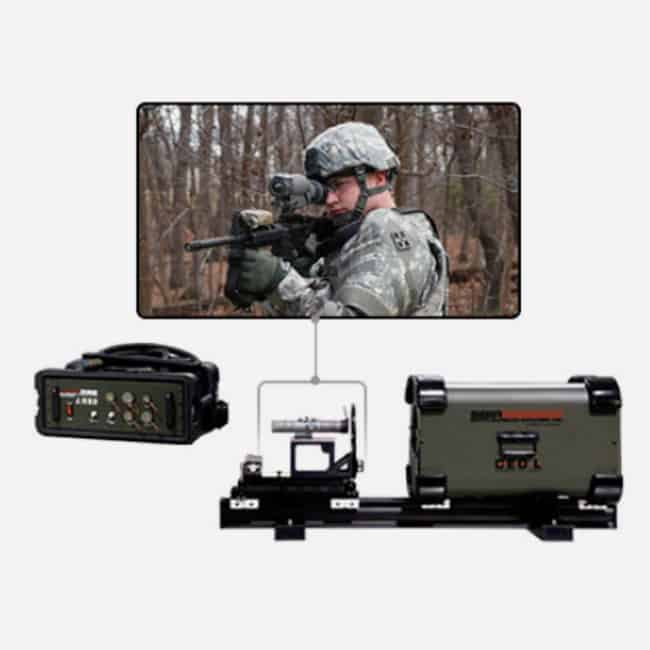
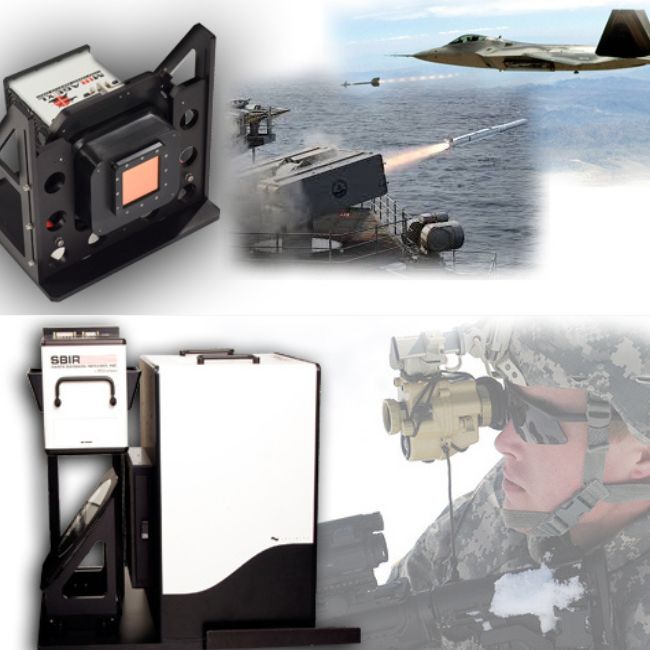
Pro‑Lite, in partnership with Santa Barbara Infrared (SBIR), provides sophisticated, integrated, multi-function EO test systems used by military organisations in laboratory, factory, depot and field test environments. Their systems are built to specific requirements and combine hardware, software and application expertise to deliver robust, easy-to-use test solutions for demanding defence programmes.
SBIR military test systems are designed to support a wide range of electro-optical, infrared, visible and laser-based sensor technologies. These systems can be configured for automated testing of FLIR systems, visible sensors, direct-view optics, laser rangefinders, designators and trackers.
Applications include:
Defence sensors must remain accurate and operational throughout their service life. SBIR test systems support testing in multiple environments, including flight line, factory, depot, dockside, on-ship and mobile shelter applications.
This makes them suitable for military organisations and defence contractors requiring reliable test capability close to the operational platform, as well as during production, qualification and maintenance.
SBIR’s multi-spectral test systems provide flexible testing capability across visible, near-infrared and infrared sensor channels. These systems help users verify alignment, performance and functionality of complex multi-sensor platforms where optical, infrared and laser systems must work together accurately.
Accurate testing is essential to maintaining confidence in mission-critical defence sensors. By providing integrated EO/IR test systems for flight line, depot, field and production environments, Santa Barbara Infrared helps defence organisations improve sensor reliability, reduce maintenance complexity and support operational readiness across advanced military platforms.
 Defence Mid-Infrared Spectroscopy Solutions
Modern defence operations require fast, accurate and reliable analytical technologies for threat detection, material verification and equipment readiness. Pro‑Lite, in partnership with NLIR, provides mid-infrared spectroscopy solutions that support real-time chemical identification, material characterisation and non-destructive testing for demanding defence environments.
NLIR’s mid-infrared spectrometers help identify molecular signatures with high precision, making them suitable for applications such as:
In defence applications, speed and accuracy are critical. NLIR technology enables rapid analysis without damaging critical components, helping defence organisations assess materials, detect potential threats and maintain operational reliability.
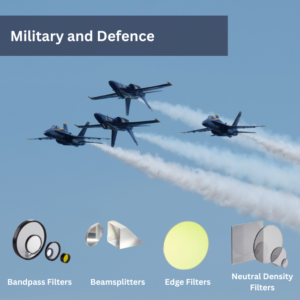 Precision Filters and Coatings for Defence Systems
Pro‑Lite partners with Andover Corporation to provide high‑performance optical filters and coatings for demanding scientific, industrial, aerospace and defence applications.
optical filters engineered for the demanding requirements of modern defence and aerospace applications. Andover’s precision thin-film filters and coatings support mission-critical systems including ISR platforms, targeting pods, infrared imaging systems, surveillance sensors, UAV payloads, night vision equipment, laser rangefinders, and space-based platforms.
With spectral coverage from 193 nm to 15 μm, Andover delivers custom and standard optical filters optimised for UV, visible, NIR, SWIR, MWIR, and LWIR applications. Andover’s capabilities include narrowband filters, laser-line filters, bandpass filters, long-pass filters, short-pass filters, dichroic filters, beamsplitters, and custom spectral solutions designed to meet stringent military and aerospace requirements.
Defence integrators and prime contractors rely on Andover filters to provide exceptional spectral performance, high transmission, deep out-of-band blocking, and long-term environmental durability. The filters are deployed in applications such as:
Defence optical systems must operate reliably in extreme operating conditions. Andover manufactures optical filters designed to withstand vibration, thermal cycling, humidity exposure, abrasion, and challenging environmental conditions encountered in military deployments. Hard-coated and sputtered filter designs provide superior durability and stable optical performance throughout the product lifecycle.
Andover specialises in infrared optical filters for defence and aerospace applications, providing solutions for SWIR, MWIR, and LWIR imaging systems. Our infrared filters support critical functions such as target acquisition, tracking, navigation, thermal imaging, surveillance, and reconnaissance in low-visibility and degraded operating environments.
Custom infrared filter designs can be optimised for specific wavelengths, bandwidths, angles of incidence, and sensor architectures, enabling superior performance in advanced defence imaging systems. Standard infrared bandpass filters are available across the 2–15 μm spectral range, with custom options tailored to exact mission requirements.
Andover optical components have supported some of the world’s most advanced defence platforms, including airborne ISR systems, targeting pods, military transport aircraft, rotorcraft targeting systems, and next-generation fighter aircraft programs. This heritage demonstrates our commitment to delivering precision optical filters and coatings that enable reliable performance in mission-critical defence applications.
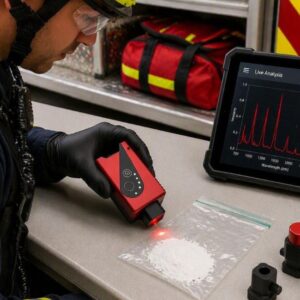 Raman Spectroscopy for Defence and Security
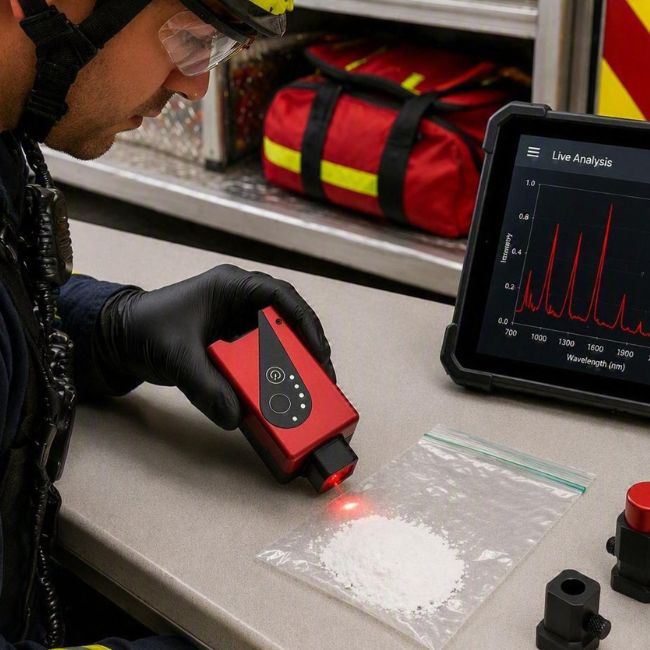
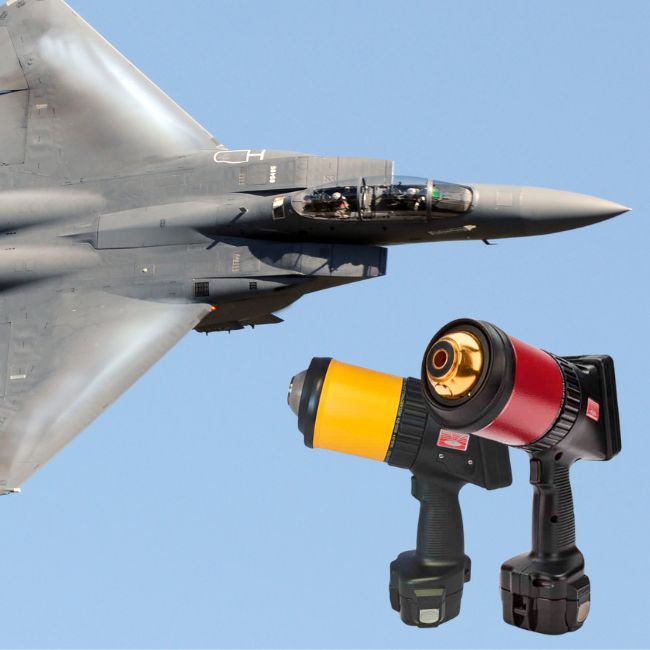
Handheld Raman spectrometers are widely used across defence, military, homeland security, border protection, law enforcement, and emergency response operations for the rapid identification of unknown substances. Raman spectroscopy provides fast, non-destructive chemical analysis, allowing users to identify explosives, narcotics, hazardous materials, toxic industrial chemicals (TICs) and potential chemical warfare agents directly in the field.
By measuring the unique molecular fingerprint of a substance, a handheld Raman spectrometer can deliver accurate chemical identification within seconds, often without opening a container or physically handling the material.
Raman spectroscopy plays an important role in Chemical, Biological, Radiological and Nuclear (CBRN) operations by enabling the identification of unknown chemicals, toxic industrial materials, and suspected chemical warfare agents. Rapid substance identification improves situational awareness and supports informed response decisions while reducing risks to personnel.
Explosive Ordnance Disposal (EOD) teams, military specialists, and security forces use handheld Raman spectrometers to identify explosives and explosive precursor chemicals. The technology can be used to screen suspicious materials and support threat assessment during military and counter-terrorism operations.
Raman spectroscopy assists military intelligence and forensic teams in analysing captured materials, investigating suspicious manufacturing sites, and identifying unknown compounds. Fast chemical identification can provide valuable intelligence and evidential support during defence operations.
Customs officers and border security agencies use Raman spectroscopy to identify narcotics, drug precursors, unknown powders, and suspicious liquids. The ability to perform non-contact analysis through transparent packaging helps minimise contamination and handling risks.
Emergency response and HazMat teams rely on handheld Raman instruments to identify hazardous chemicals, corrosives, industrial solvents, and unknown substances at incident scenes. Rapid identification supports the selection of appropriate personal protective equipment (PPE) and containment procedures.
Raman spectrometers are deployed at airports, ports, government facilities, transportation hubs, and other critical infrastructure locations to investigate suspicious substances and support security screening activities.
Wasatch Photonics is a leading supplier of OEM Raman spectrometers and spectroscopy engines used by manufacturers of portable chemical identification systems. Their compact and rugged Raman technology supports the development of handheld and field-deployable instruments for defence, homeland security, CBRN response, and hazardous materials identification.
 Defence Reflectance & Optical Property Measurement Solutions
Modern defence platforms require precise control of optical and infrared signatures to support survivability, material performance and mission effectiveness. Pro-Lite, in partnership with Surface Optics, provides reflectometer systems and optical property measurement solutions used to qualify infrared reflectance on combat vehicles and determine optical characteristics during the development of advanced aerospace materials.
Surface Optics reflectometers support the measurement and verification of infrared reflectance across defence surfaces, coatings and materials. These measurements help ensure that combat vehicles, low-observable platforms and coated components meet required optical and infrared performance targets.
Applications include:
Surface Optics specialises in optical property measurement for low-observable and signature-sensitive applications. By measuring how materials reflect, absorb and emit energy across relevant wavelengths, defence teams can better understand and optimise the appearance and performance of vehicles, aircraft and other platforms in operational environments.
During the development of new aerospace materials, optical properties such as reflectance, absorptance and thermal emissivity are critical for understanding heat transfer, surface behaviour and platform performance. Surface Optics instrumentation helps engineers characterise these properties from early-stage material development through testing, validation and maintenance.
Accurate optical property data is essential for electro-optical and infrared signature modelling. Surface Optics provides measurement tools and services for characterising directional hemispherical reflectance, bidirectional reflectance and other material properties needed to support realistic modelling of targets, backgrounds and defence platforms.
By combining reflectometer technology, optical property measurement expertise and defence-focused coating knowledge, Surface Optics helps military organisations, aerospace engineers and defence contractors evaluate materials, qualify coatings and optimise platform performance for demanding operational environments.
 SWIR Cameras & Sensors for Aerospace Imaging Applications
New Imaging Technologies (NIT) SWIR cameras, including the SenS 1920 and WiDy 640, are advanced imaging solutions designed for high-performance aerospace and defence applications. Operating in the short-wave infrared (SWIR) spectrum, these cameras enable enhanced visibility in low-light, obscured, and high-contrast environments where conventional visible-light systems are limited. Combining high sensitivity, wide dynamic range, and compact form factors, NIT cameras support reliable imaging, detection, and analysis in airborne, spaceborne, and UAV-based systems, ensuring mission-critical performance across a wide range of operational conditions.
Applications:
Pro-Lite supplies specialist optical, photonic, infrared, calibration and test equipment for defence applications. As a distributor, we work closely with our manufacturing partners to ensure that each customer’s technical, operational and compliance requirements are understood and met.
Pro-Lite supports a range of defence-related applications, including EO/IR sensor testing, infrared reflectance measurement, remote sensor calibration, military display and lighting testing, optical filter selection, spectroscopy, material characterisation and non-destructive testing.
Yes. Pro-Lite can support equipment calibration requirements by coordinating with the relevant manufacturer or approved calibration provider. We also take care of the export and import process where equipment needs to be returned overseas for calibration.
If equipment is too large, complex or impractical to ship, Pro-Lite can help arrange onsite calibration where this service is available. We coordinate with the manufacturer or service provider to support a practical calibration solution with minimal disruption to the customer.
Yes. Pro-Lite can help manage the export and import of equipment for calibration, service or manufacturer support. This helps simplify the process for customers, particularly when equipment needs to be returned internationally.
Yes. Pro-Lite is registered on JOSCAR, supporting supplier assurance for aerospace, defence and security customers. This helps streamline procurement and demonstrates that Pro-Lite meets recognised requirements for working with defence-sector organisations.
Yes. Pro-Lite holds Cyber Essentials Plus certification, providing independently verified assurance that appropriate cyber security controls are in place. This is especially important for customers operating within defence, aerospace and security supply chains.
Yes. Pro-Lite can support customers across the full project lifecycle, from early-stage research and development through to qualification, compliance testing, production quality control, maintenance and calibration support.
Pro-Lite combines specialist technical knowledge, close relationships with leading manufacturers, logistics support, calibration coordination, JOSCAR registration and Cyber Essentials Plus certification. This makes us a trusted partner for defence customers requiring reliable optical, infrared, photonic and measurement technologies.