 High‑Precision CFRP Optical Breadboards, Benches & Structural Components
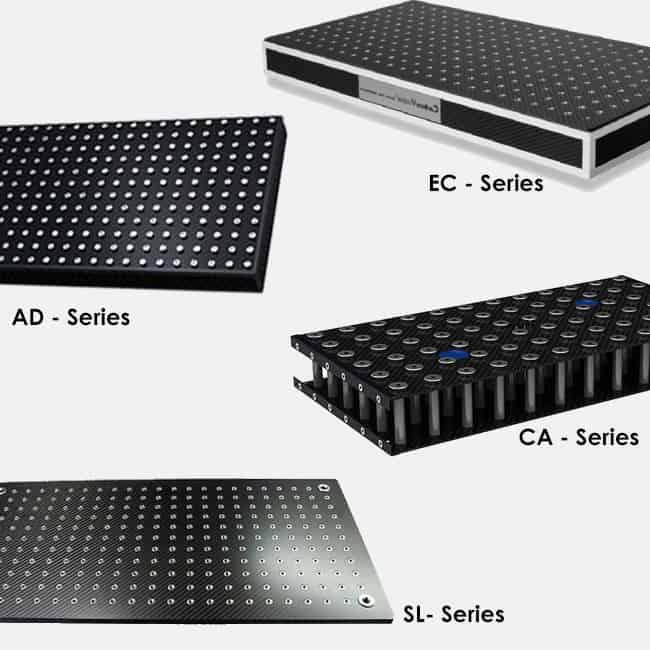
CarbonVision produces advanced carbon fibre reinforced polymer (CFRP) breadboards that are highly suited for aerospace applications due to their exceptional mechanical and thermal properties. These breadboards are significantly lighter—up to 75% less than traditional steel alternatives—while maintaining high stiffness and structural integrity.
Their low coefficient of thermal expansion, comparable to or better than Super Invar, ensures dimensional stability in fluctuating thermal environments, which is critical for precision instruments in space.
Additionally, their non-magnetic nature and superior vibration damping (up to 60% better than steel) make them ideal for sensitive optical and electronic systems used in satellites, spacecraft, and high-altitude platforms. CarbonVision’s modular and customisable designs further enhance their utility in complex aerospace setups, including mobile and cleanroom environments.
Applications
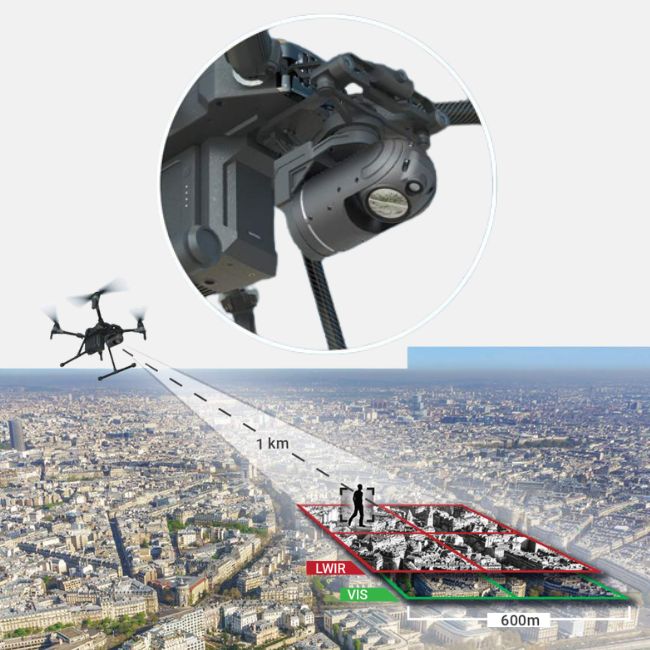 High-Resolution Panoramic View – Velox
Velox is an advanced miniature gyro-stabilised EO/IR payload designed for high-performance aerial surveillance and situational awareness in aerospace and defence applications. Featuring a compact 2-axis architecture, it combines a high-resolution 12.3 MP visible camera with a 640×512 uncooled thermal imager, enabling reliable operation in both daylight and low-light conditions. Its closed-loop stabilisation system, supported by gyroscopes and encoder feedback, achieves line-of-sight stability down to 80 µRad, ensuring sharp, blur-free imaging even under high dynamic motion and vibration. Integrated with modern control and data interfaces, including Mavlink via Nvidia NX and MIPI CSI-2 and USB connectivity, Velox provides a flexible and efficient solution for airborne platforms requiring precision sensing, tracking, and environmental awareness.
Velox in Aerospace Applications:
 Hexapods in Aerospace
Hexapods are advanced multi-axis motion platforms widely used in aerospace and defence for precision positioning, alignment, and simulation tasks. Based on a parallel kinematic design, they provide six degrees of freedom (X, Y, Z, pitch, roll, yaw) with exceptional accuracy, stiffness, and repeatability. Their compact structure and high load capacity make them particularly well suited to demanding aerospace environments, including satellite integration, optical alignment, and environmental testing. These systems enable precise, coordinated movement of complex components, ensuring reliable performance in critical applications.
Hexapods in Aerospace Applications:
Satellite and Payload Alignment – Enable precise positioning of sensors, optical payloads, and antennas during assembly and inspection, ensuring correct alignment before launch.
Optical System Alignment – Used to align high-performance optical systems such as telescopes, laser communication systems, and imaging instruments, where sub-micron precision is required.
Flight Simulation and Motion Reproduction – Capable of replicating complex motion profiles to simulate aircraft or spacecraft movement for testing and validation of components.
Environmental Testing Support – Provide stable, accurate positioning of components within thermal vacuum chambers and vibration test setups.
Sensor and Inertial System Calibration – Support calibration of gyroscopes, accelerometers, and IMUs by delivering controlled multi-axis motion with high repeatability.
Large Payload Handling and Integration – Designed to handle heavy or delicate aerospace assemblies while maintaining precise control, even in constrained or cleanroom environments.
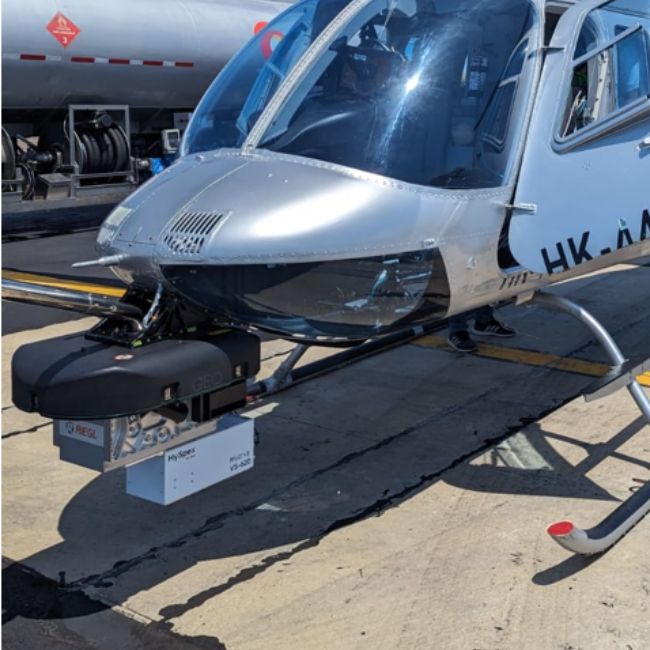 Hyperspectral Cameras for Aerospace & Remote Sensing Applications
HySpex hyperspectral cameras by NEO are advanced imaging systems designed for high-precision aerospace and space-based applications. By combining imaging and spectroscopy, these cameras capture detailed spectral information across hundreds of contiguous wavelength bands, enabling precise material identification and environmental analysis far beyond conventional imaging systems. Their robust, compact design and high radiometric accuracy make them suitable for demanding environments, including airborne platforms, high-altitude missions, and satellite payloads, where reliable data acquisition and analytical performance are critical.
Applications:
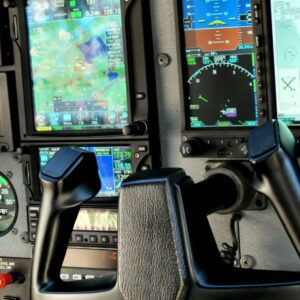 Imaging Photometers for Aerospace & Display Testing Applications
Imaging photometers from Westboro Photonics are high-precision optical measurement systems designed to support aerospace and defense applications where accurate photometric and colorimetric performance is critical. By combining calibrated imaging with advanced analysis software, these systems deliver fast, repeatable, and spatially resolved measurements of luminance, chromaticity, and uniformity. They are widely used in research, development, and compliance testing to ensure that aerospace displays, lighting systems, and illuminated components meet strict industry standards while maintaining safety, readability, and visual comfort.
Applications:
Cockpit and Avionics Display Testing – Imaging photometers are used to measure luminance, contrast, and uniformity of cockpit displays, instrument clusters, and mission-critical interfaces, ensuring compliance with aerospace standards and optimal readability under varying lighting conditions.
Head-Up and Near-Eye Display Evaluation – Essential for testing HUDs, helmet-mounted displays (HMDs), and near-eye systems, enabling accurate assessment of brightness, clarity, and optical performance at various viewing distances.
Backlit Panels and Graphics Measurement – Used to evaluate illuminated switches, control panels, and backlit graphics, including luminance distribution and character visibility, ensuring compliance with standards such as SAE AS7788.
Uniformity and Light Plate Balancing – Provides real-time spatial luminance data to assess and optimise light distribution across panels and displays, enabling consistent brightness and eliminating visible non-uniformities.
NVIS and Low-Light Display Performance – Supports testing of display dimming behaviour and spectral characteristics to ensure compatibility with night-time operations and preservation of pilot night vision.
Cabin Lighting and Signage Validation – Enables measurement of luminance, chromaticity, and intensity distribution for cabin lighting, signage, and passenger displays, improving safety, visibility, and passenger experience.
Exterior Lighting and Beam Pattern Analysis – Used to characterise aircraft lighting systems such as navigation lights, floodlights, and spotlights, ensuring correct intensity distribution and compliance with angular performance requirements.
R&D, Compliance, and Production Testing – Integrated with Photometrica software, imaging photometers streamline testing workflows, reduce measurement time, and provide repeatable, standards-compliant results across development, qualification, and manufacturing stages.
Labsphere provides a wide range of precision optical and photometric equipment tailored for aerospace applications, particularly in the calibration and validation of optical systems. Their integrating spheres are commonly used for flat-field calibration of satellite sensors and imaging payloads, ensuring uniform light distribution for accurate measurements.
Reflectance and transmittance measurement systems help evaluate spacecraft materials and coatings, which is critical for thermal control and optical performance in space.
Labsphere also offers spectral calibration sources that provide traceable light for pre-launch testing of Earth observation and astronomical instruments. Additionally, their laser power measurement systems support the development and validation of aerospace laser technologies, including communication and targeting systems. For more specialised needs, Labsphere designs custom radiometric and photometric solutions, such as portable calibration units and onboard reference sources, which are often integrated into UAVs, satellites, and space telescopes.
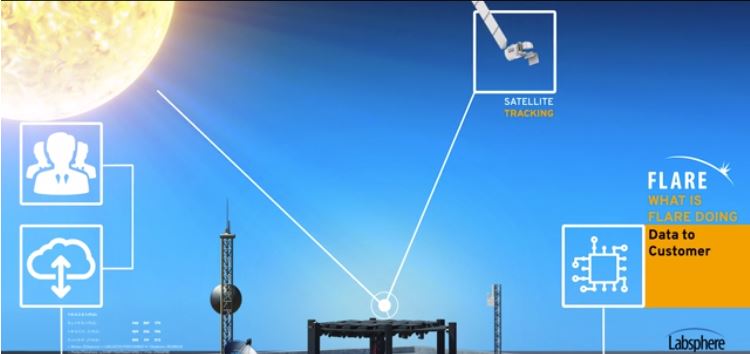
Labsphere’s FLARE system — short for Field Line-of-sight Automated Radiance Exposure — is a cutting-edge solution designed specifically for aerospace calibration applications. It forms part of a global vicarious calibration network that provides both static and mobile reference sites for calibrating spaceborne, airborne, and UAV imaging systems.
In aerospace, FLARE is used to automate the radiometric and spatial calibration of satellite and UAV sensors. It leverages Labsphere’s SPARC (Specular Array Radiometric Calibration) mirror technology to simulate known radiance targets, allowing sensors to be calibrated remotely and on-demand — without the need for traditional, labour-intensive field campaigns. This is especially valuable for Earth observation satellites, military ISR platforms, and scientific remote sensing missions, where consistent and traceable calibration is critical for data accuracy.
By integrating FLARE into aerospace workflows, organisations can ensure their imaging systems deliver high-quality, validated data throughout the mission lifecycle — from pre-launch testing to in-orbit performance monitoring
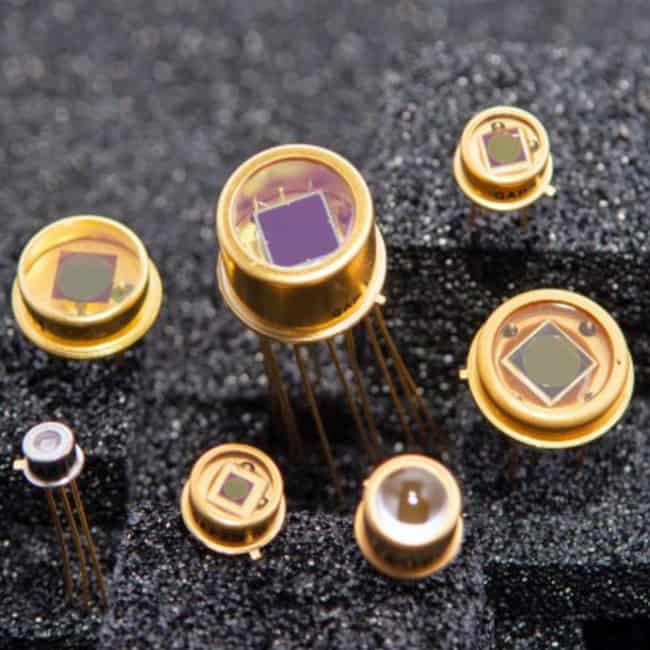 Precision Optical Detection for Aerospace Systems
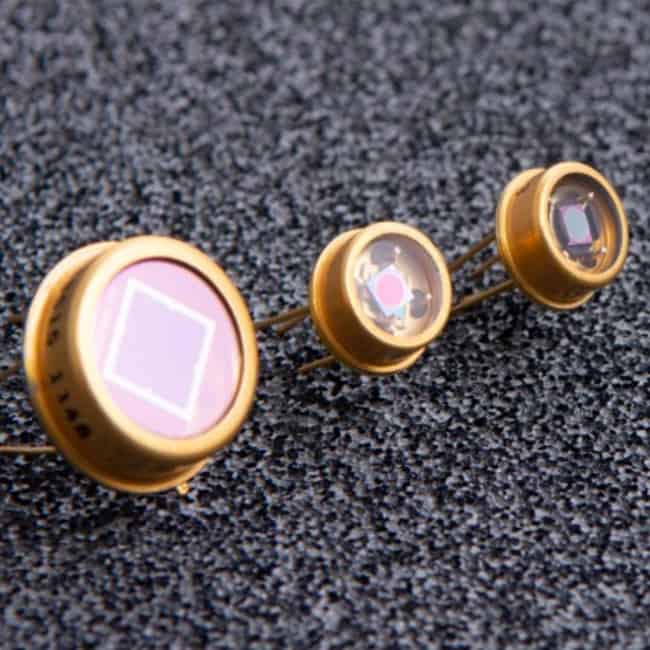
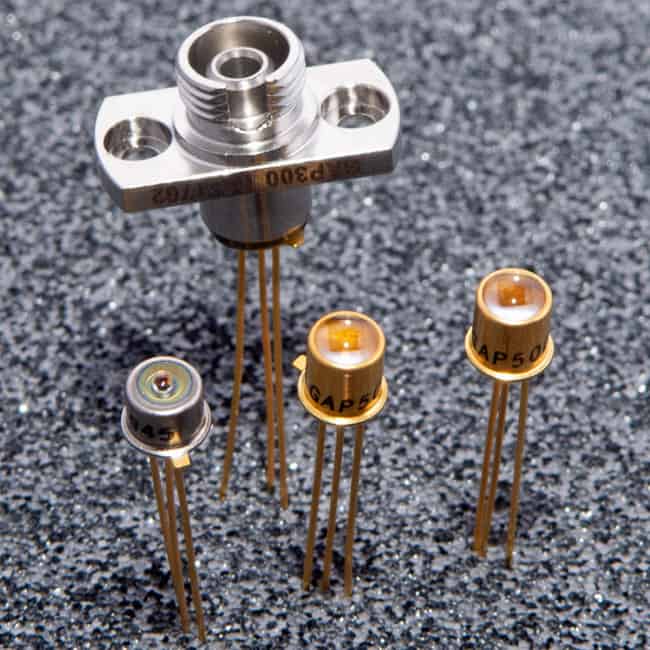
In aerospace environments, reliability is non-negotiable. GPD Optoelectronics photodetector solutions are designed to deliver stable, high-precision optical performance across the most demanding airborne and spaceborne applications.
Engineered for low noise, high sensitivity, and fast response, these components enable advanced systems for sensing, communication, and navigation—where consistent performance is mission-critical.
Aerospace applications require technologies that can withstand harsh and unpredictable environments. Our photodetectors are designed to operate reliably under:
With proven deployment in orbit and extended-life programmes, these devices offer long-term operational confidence in even the most challenging conditions.
GPD Optoelectronics solutions support a wide range of aerospace technologies, including:
We offer flexible configurations to meet the specific requirements of aerospace platforms, including:
This ensures seamless integration into satellite payloads, avionics systems, and advanced sensor platforms.
Consistency and quality control are central to our manufacturing approach. From early-stage development through to volume production, our solutions are built to provide:
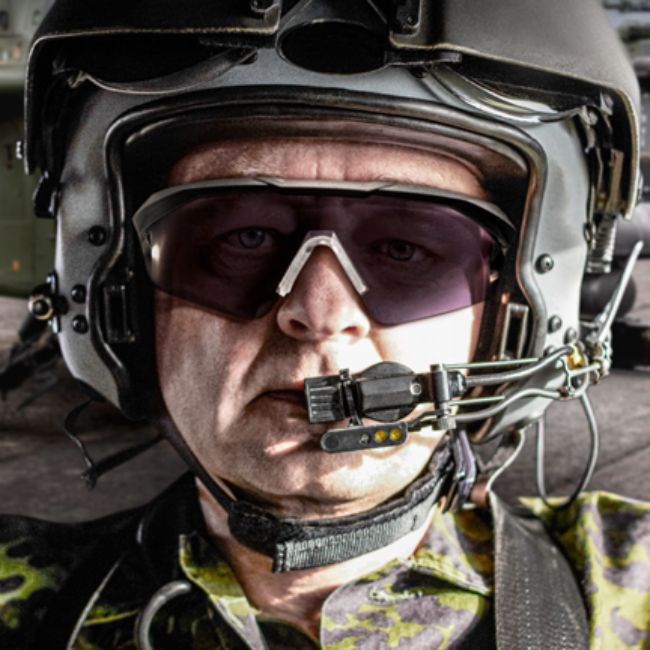
Laser safety is critical in aerospace and defence environments, where high-power laser systems are increasingly used in applications such as LIDAR, laser communication, targeting, and materials processing. Effective laser safety solutions are essential to protect personnel, ensure regulatory compliance, and maintain safe operation in both laboratory and production settings. A comprehensive approach to laser safety includes personal protective equipment, engineered controls, and training, all tailored to the specific laser wavelengths, power levels, and operational environments involved.
Laser Safety in Aerospace Applications:
Laser Safety Eyewear (Goggles) – Provides certified protection against specific laser wavelengths used in aerospace systems, ensuring operator safety during alignment, testing, and operation of laser equipment.
Laser Safety Windows and Enclosures – Installed in laboratories, test facilities, and cleanrooms to allow safe observation of laser processes while preventing hazardous exposure to laser radiation.
Large Area Laser Protection – Includes curtains, barriers, and shielding solutions designed to secure entire workspaces, particularly in integration and test environments where high-power or open-beam systems are used.
Laser Laboratory and Facility Safety Design – Supports the implementation of controlled environments, ensuring compliance with laser safety standards while maintaining operational efficiency in aerospace R&D and production facilities.
Laser Safety Training – Provides essential knowledge for engineers, technicians, and safety officers, covering hazard identification, safe working practices, and regulatory requirements for laser use in aerospace applications.
Custom Safety Solutions – Tailored laser safety configurations designed to meet specific system requirements, including unique wavelengths, high-power applications, and specialised aerospace testing setups.
 Precision Motion Control Equipment for Aerospace Optics
Nanomotion provides advanced motion control solutions for aerospace applications, particularly where precision, compact size, and rugged performance are critical. Their systems are built around piezoelectric ultrasonic motors, which offer silent, high-resolution motion with no magnetic fields — ideal for sensitive aerospace environments.
Piezoelectric Motors & Drives
Multi-Axis Motion Stages
Custom Motion Modules
Rotary and Linear Stages
Shutters and Actuators
Nanomotion’s aerospace solutions are engineered to meet SWaP (Size, Weight, and Power) constraints and are tested to comply with defense and environmental standards.

WaveFront Technology develops advanced nano- and micro-structured optical films engineered to precisely control and manipulate light for high-performance aerospace and display applications. Leveraging proprietary microstructure origination and roll-to-roll UV embossing processes, these films—including Fresnel lens films, holographic optical elements (HOEs), and light-management films—deliver enhanced optical efficiency, improved visibility, and tailored light distribution. Their lightweight, scalable construction and high optical fidelity make them well suited for integration into aerospace systems where performance, reliability, and compact form factors are critical.
Applications:
Head-Up Display (HUD) Optical Enhancement – Micro-structured films such as HOEs and Fresnel lens films improve brightness, contrast, and light direction in HUD systems, enhancing image clarity and visibility in demanding aerospace environments.
Light Management and Beam Shaping – Prismatic, diffuser, and glare-control films precisely tailor light distribution, enabling efficient light shaping, improved uniformity, and reduced stray light in cockpit and avionics systems.
Display Visibility and Contrast Optimisation – Optical films enhance readability of displays and illuminated interfaces by controlling luminance, reducing glare, and improving perceived contrast under varying lighting conditions.
Lightweight Optical Integration – Thin-film Fresnel and diffractive structures provide compact, lightweight alternatives to traditional optics, supporting aerospace systems where size, weight, and efficiency are key constraints.
Custom Optical Components for Aerospace Systems – WaveFront’s capability to design and manufacture bespoke micro-structured films enables tailored optical solutions for specialised sensing, imaging, and illumination requirements.
Holographic Optical Functionality – Advanced HOEs and diffractive structures enable complex light manipulation, including beam steering and image projection, supporting next-generation optical and display technologies.
Scalable Manufacturing and Multi-Platform Deployment – High-volume roll-to-roll production ensures consistent quality and repeatability, enabling integration of optical films into aerospace components, display assemblies, and advanced optical systems at scale.
 Optical Filters for Aerospace, Space & Defence Systems
Aerospace systems rely on optical technologies that deliver absolute precision and consistent performance. Andover Corporation’s advanced optical filters and coatings are engineered to meet the strict requirements of airborne and space-based platforms, where accuracy and reliability are mission-critical.
From satellite payloads to high-altitude sensing systems, these components provide precise wavelength control, enabling accurate measurement, imaging, and data acquisition across demanding aerospace environments.
Operating in aerospace conditions requires components that perform reliably under intense environmental stress. Our solutions are engineered to maintain performance across:
These features ensure long-term stability and dependable operation in both airborne and space missions.
Our optical technologies enable a wide range of aerospace applications, including:
These applications depend on high-performance coatings and filters that deliver consistent spectral accuracy and transmission efficiency.
Our solutions are developed to integrate seamlessly into compact and complex aerospace systems, offering:
This flexibility allows optimisation for specific mission requirements, from low Earth orbit to deep-space applications.
With decades of expertise in optical engineering and manufacturing, Andover Corporation’s solutions are built to meet the highest aerospace standards. Every component is designed with:
This ensures confidence from development through deployment in critical aerospace programs.
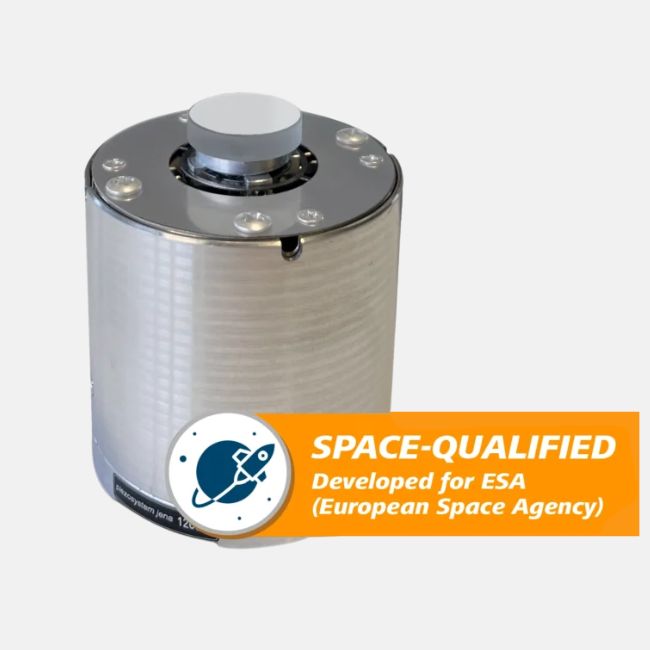 Piezoelectric Nanopositioning Systems for Aerospace Precision Alignment
The aerospace sector is rapidly evolving, with increasing numbers of satellites, drones, and space vehicles being deployed. As low Earth orbit (LEO) constellations grow, so does the need for faster, more secure data transmission. Optical inter-satellite communication is becoming the preferred technology—and it relies on one critical capability: precise beam steering and stabilisation.
Piezosystem jena delivers advanced piezo-based motion solutions designed specifically to meet this requirement, enabling reliable laser communication between fast-moving satellites.
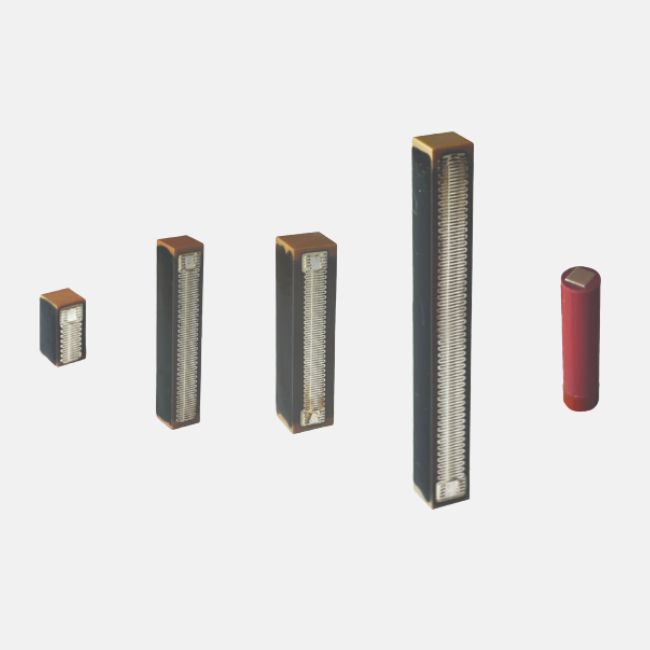
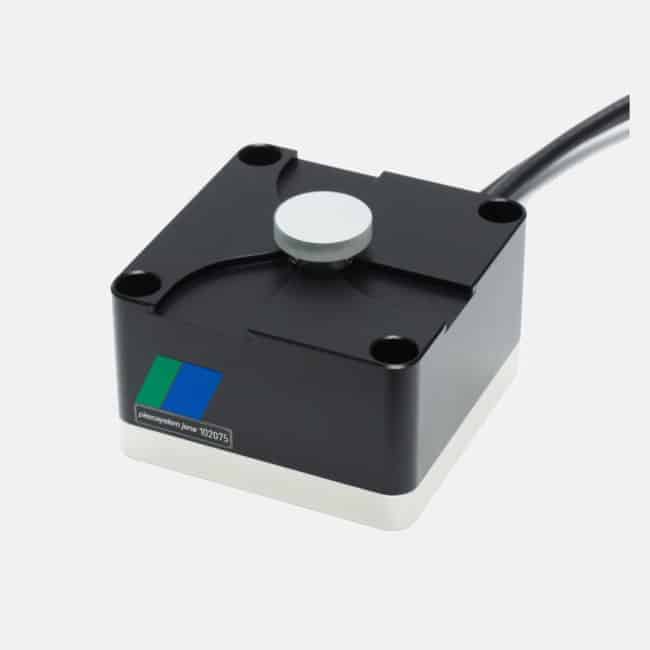
At the heart of these systems are piezo-driven tip-tilt actuators. Using advanced piezo-ceramic stacks and flexure-based designs, these systems allow mirrors to be positioned with exceptional speed and precision.
Key performance benefits include:
This level of accuracy ensures stable and continuous alignment of optical beams—essential for maintaining high-speed communication links in space.
In aerospace systems, every gram and watt matters. Piezosystem jena designs its solutions with real-world satellite constraints in mind:
These features make piezo tip-tilt systems ideal for modern satellite platforms where reliability and efficiency are critical.
Piezoelectric technology offers inherent advantages for aerospace applications. Piezosystem jena solutions are:
In addition, piezo actuators require no power to maintain position, significantly reducing onboard energy consumption—an important benefit for power-limited satellite systems.
Piezosystem jena’s PSH series has been developed to meet the demanding requirements of European Space Agency (ESA) programmes. These systems are validated for critical functions in optical inter-satellite communication, including:
By combining both functions in a single system, the PSH series reduces system complexity, lowers integration effort, and optimises overall performance.
Piezosystem jena solutions deliver measurable benefits for aerospace systems:
These features make them a trusted choice for satellite communication, beam steering, and other high-precision aerospace applications.
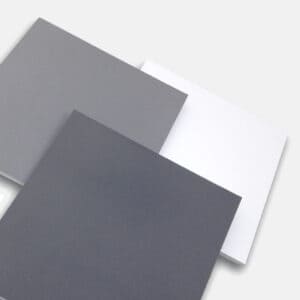
Reflectance targets from Labsphere and SphereOptics are high-precision optical reference materials designed to provide stable, calibrated reflectance across the UV, visible, NIR, and SWIR spectral ranges. Engineered using advanced diffuse materials such as Spectralon® and Zenith Polymer®, these targets exhibit near-Lambertian reflectance, ensuring uniform light scattering independent of viewing geometry. Their high stability, durability, and NIST-traceable calibration make them essential tools for aerospace and remote sensing applications, where accurate radiometric calibration and validation of optical systems are critical.
Applications:
Satellite and Airborne Sensor Calibration – Reflectance targets provide a known radiometric reference for calibrating imaging payloads on satellites, aircraft, and UAVs, ensuring accurate and consistent data acquisition across remote sensing platforms.
Ground Truthing for Remote Sensing – Used in field campaigns to establish baseline reflectance measurements, enabling validation and correction of multispectral and hyperspectral imagery collected from airborne and space-based systems.
Radiometric and Spectral Instrument Calibration – Essential for calibrating spectroradiometers, spectrophotometers, colorimeters, and imaging systems, ensuring traceable and repeatable optical measurements.
Hyperspectral and Multispectral Imager Validation – Multi-level reflectance targets (white, grey, and black) enable accurate characterisation of sensor response, contrast, and dynamic range for advanced imaging systems.
LiDAR and Time-of-Flight Sensor Testing – Large-area reflectance targets support calibration and performance evaluation of LiDAR and distance-measurement systems used in aerospace mapping and sensing applications.
In-Field Radiometric Referencing – Portable and durable targets provide consistent reference measurements under varying environmental conditions, enabling reliable calibration in real-world operational environments.
Optical System Development and Validation – Used throughout R&D, qualification, and production to verify system performance, support sensor fusion workflows, and ensure compliance with radiometric standards in aerospace missions.

Surface Optics handheld reflectometers and emissometers are compact, field-ready instruments designed for accurate on-site measurement of optical and thermal surface properties in aerospace environments. These portable devices enable engineers and technicians to quickly assess reflectance and emissivity directly on components, coatings, and structures without the need for laboratory setups. By providing immediate, reliable data in real-world conditions, they support efficient validation, maintenance, and performance optimisation of aerospace materials, particularly where mobility, speed, and precision are critical.
On-Site Thermal Property Measurement – Allow direct measurement of emissivity on aircraft surfaces, satellite components, and coatings, ensuring correct thermal behaviour without dismantling systems.
Portable Reflectance Testing – Enable quick evaluation of how surfaces reflect light across relevant wavelengths, supporting verification of coatings and materials in operational environments.
Maintenance and Inspection – Used during routine checks to confirm that surface properties remain within required limits, helping detect degradation or contamination.
Field Calibration Support – Provide reliable reference measurements for EO/IR systems, ensuring sensors maintain accuracy in real deployment conditions.
Rapid Material Verification – Assist engineers in validating coatings and surface treatments during integration or repair processes, reducing downtime and reliance on lab testing.
Aerospace Quality Assurance – Support production and field teams with consistent, repeatable measurements for compliance and performance validation.
Spectroradiometers from Spectral Evolution are high-precision optical instruments designed for accurate spectral measurement across the UV, visible, near-infrared (NIR), and shortwave infrared (SWIR) regions. Engineered for both field and laboratory use, these systems deliver precise measurements of radiance, irradiance, and reflectance, enabling detailed characterisation of light and materials. Their rugged, portable design, high spectral resolution, and NIST-traceable calibration make them ideally suited for aerospace and remote sensing applications, where reliable, repeatable spectral data is essential for sensor validation and environmental analysis.
Applications:
Ground Truthing for Airborne and Satellite Sensors – Spectroradiometers are widely used to collect in-situ spectral data for calibration and validation of hyperspectral and multispectral imagery acquired from satellites, aircraft, and UAV platforms.
Radiometric Calibration and Sensor Validation – High-accuracy spectral measurements support radiometric transfer and calibration of imaging systems, ensuring consistent and traceable performance across aerospace optical payloads.
Atmospheric and Environmental Monitoring – Enables precise analysis of surface reflectance and radiative properties for studies of climate change, vegetation health, soil composition, and environmental conditions from airborne and space-based observations.
Hyperspectral Data Validation – Provides reference spectral signatures for validating hyperspectral datasets, improving classification accuracy and material identification in remote sensing missions.
Solar and Optical Source Characterisation – Used to measure irradiance and spectral output of solar simulators and light sources, supporting testing and qualification of aerospace systems and components.
Material and Surface Analysis – High-resolution spectral measurements enable identification and classification of minerals, coatings, and aerospace materials based on their unique spectral signatures.
Flexible Field and Laboratory Deployment – Compact, lightweight, and battery-powered systems support deployment in field campaigns, airborne experiments, and laboratory environments, providing consistent, high-quality data across diverse aerospace workflows.
 SWIR Cameras & Sensors for Aerospace Imaging Applications
New Imaging Technologies (NIT) SWIR cameras, including the SenS 1920 and WiDy 640, are advanced imaging solutions designed for high-performance aerospace and defence applications. Operating in the short-wave infrared (SWIR) spectrum, these cameras enable enhanced visibility in low-light, obscured, and high-contrast environments where conventional visible-light systems are limited. Combining high sensitivity, wide dynamic range, and compact form factors, NIT cameras support reliable imaging, detection, and analysis in airborne, spaceborne, and UAV-based systems, ensuring mission-critical performance across a wide range of operational conditions.
Applications:
Why do aerospace teams choose Pro‑Lite?