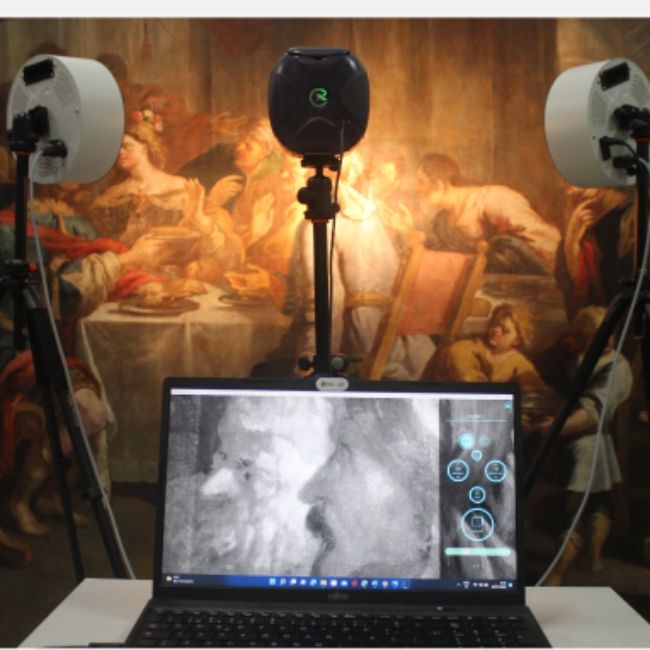
 Hyperspectral Cameras for Art and Cultural Heritage
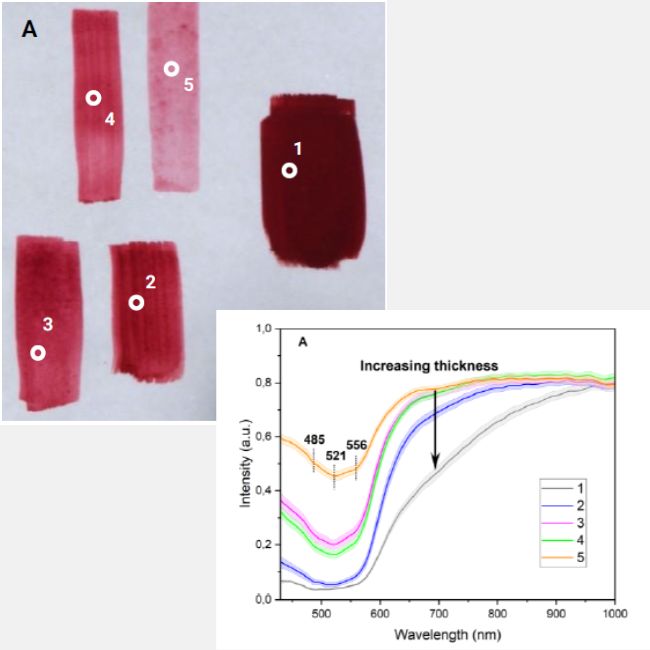
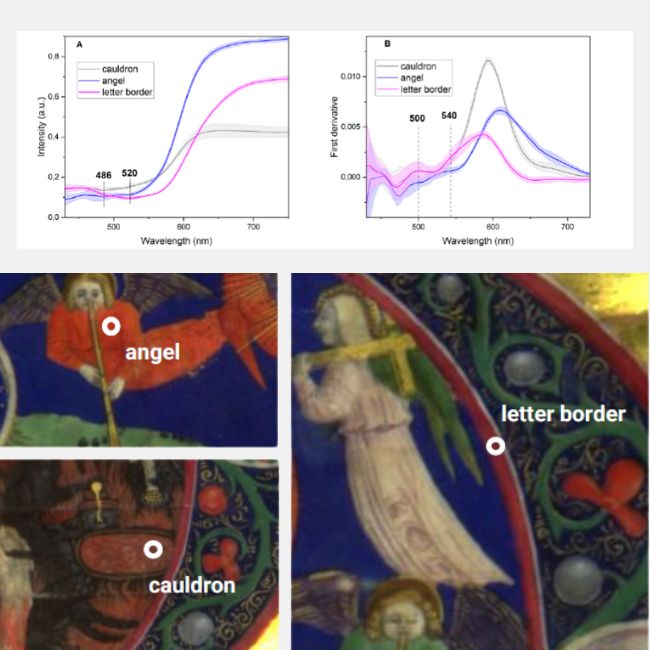
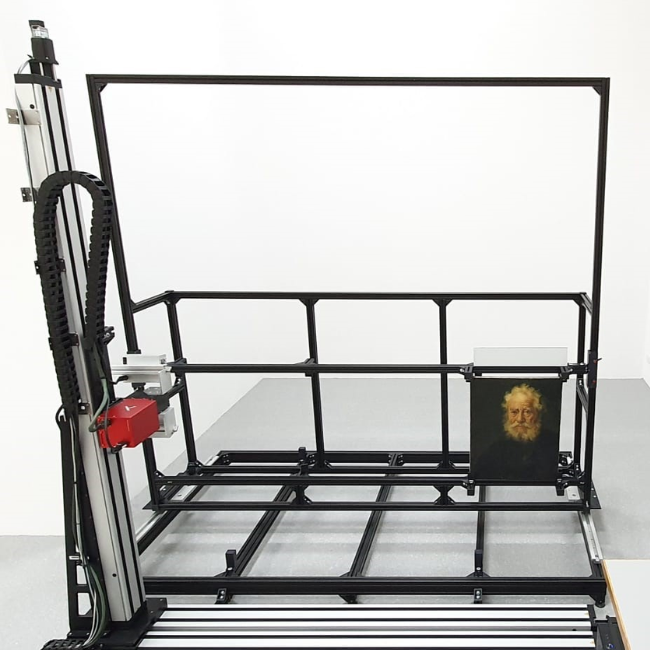
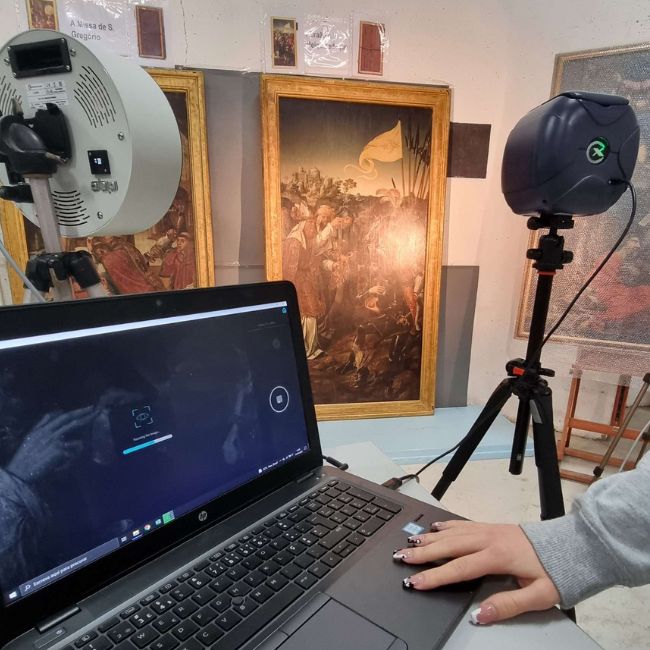
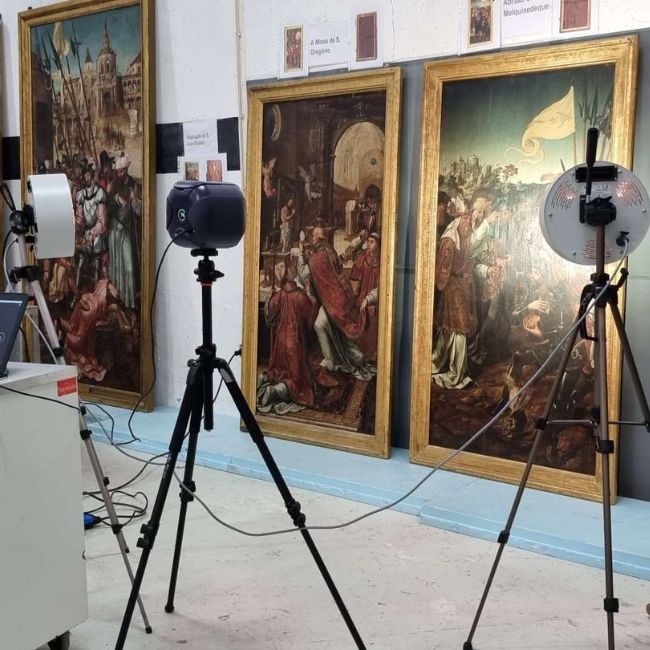
Hyperspectral imaging cameras are a powerful, non-destructive technology widely used in art conservation, cultural heritage science, and museum research. By capturing hundreds of narrow spectral bands across the visible, near-infrared (NIR), and short-wave infrared (SWIR) regions, hyperspectral systems provide a detailed spectral signature for every pixel. This enables highly accurate material identification, pigment analysis, and condition monitoring that cannot be achieved with conventional imaging.
We represent leading hyperspectral camera manufacturers including Nireos, HySpex, Hinalea, and Cubert, offering a comprehensive portfolio suited to both laboratory and in situ analysis. These systems are designed to deliver high spectral resolution, radiometric accuracy, and non-invasive analysis, making them ideal for sensitive and valuable artworks.
Hyperspectral cameras are particularly valuable in art and cultural heritage because they provide non-contact, non-invasive analysis, preserving the integrity of fragile objects. Their ability to detect subtle spectral differences allows conservators and scientists to uncover hidden information, assess material composition, and monitor deterioration over time.
Pigment identification and mapping – Accurate differentiation of historical and modern pigments using spectral fingerprints.
Underdrawing and hidden layer detection – Revealing sketches, compositional changes, and concealed features beneath paint layers.
Artwork authentication and attribution – Identifying original materials versus later additions, overpainting, or forgeries.
Condition assessment and degradation analysis – Detecting chemical and physical changes due to ageing, light exposure, or environmental factors.
Restoration and conservation planning – Informing treatment decisions and evaluating restoration outcomes.
Mapping retouching and previous interventions – Highlighting areas of restoration invisible to the naked eye.
Digital documentation and spectral archiving – Creating highly detailed spectral records for long-term preservation and research.
By integrating hyperspectral imaging into cultural heritage workflows, institutions can achieve advanced, data-driven insights into artworks, improving conservation outcomes while ensuring minimal intervention.
 Multispectral Cameras for Art and Cultural Heritage
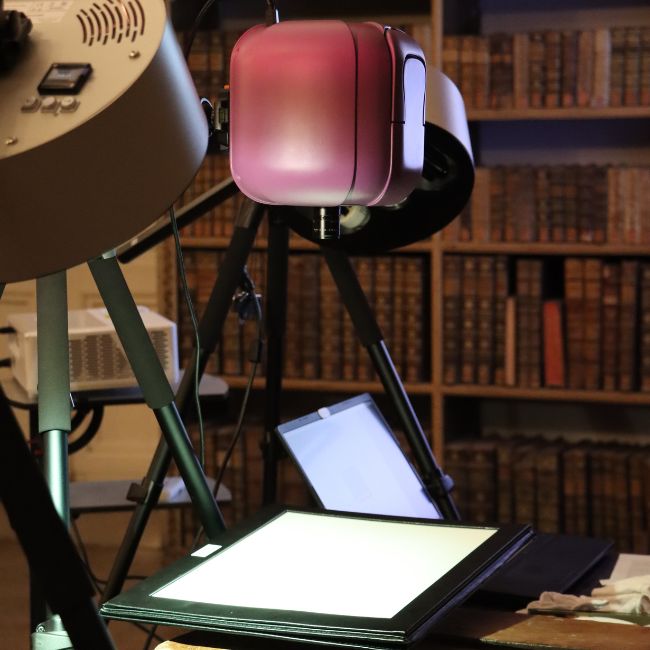
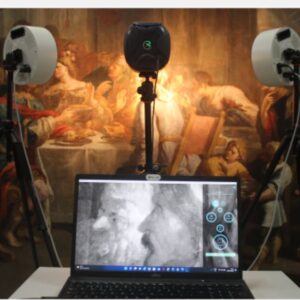
Multispectral imaging cameras are a widely used, non-destructive technology in art conservation, cultural heritage science, and museum documentation, providing valuable insight into artworks by capturing images at selected wavelengths across the electromagnetic spectrum. By recording data in discrete spectral bands across the UV, visible, and near-infrared regions, multispectral systems enable users to reveal hidden features, analyse materials, and assess condition in a fast and practical way.
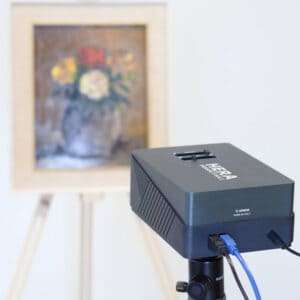
We offer advanced multispectral imaging solutions from XpectralTek, a company that has developed dedicated systems for art analysis and cultural heritage applications. Their technology combines expertise in spectral imaging and software development to deliver integrated, user-friendly solutions for conservators, researchers, and heritage professionals.
Multispectral cameras are a key tool in cultural heritage because they provide non-contact, non-invasive imaging, ensuring that fragile and valuable objects are not disturbed during analysis. They are particularly valued for their ability to deliver rapid, repeatable results, making them ideal for routine examination, condition reporting, and large collection surveys.
While hyperspectral imaging offers higher spectral resolution, multispectral systems remain essential because they are faster to acquire, easier to process, and more cost-effective, with lower data complexity. This makes them highly practical for day-to-day use, often serving as a first-line investigative technique, with more advanced methods used only when deeper analysis is required.
Underdrawing and infrared reflectography – Revealing sketches and compositional changes beneath painted surfaces.
Detection of retouching and overpainting – Identifying previous restorations and conservation interventions.
Pigment group differentiation – Distinguishing between broad classes of pigments and materials.
Condition assessment and damage detection – Highlighting cracks, fading, varnish layers, and areas of deterioration.
UV fluorescence imaging – Visualising varnishes, coatings, and organic materials under ultraviolet light.
Reading obscured or hidden text – Recovering faded, erased, or censored writing in historical documents.
Documentation and technical imaging – Creating consistent, high-quality records for conservation reports and archives.
Authentication support – Providing visual evidence of inconsistencies, later additions, or material differences.
By integrating multispectral cameras such as those from XpectralTek into cultural heritage workflows, institutions benefit from fast, reliable, and non-invasive imaging, supporting better conservation decisions, improved documentation, and enhanced understanding of artworks.
 SWIR Cameras for Art and Cultural Heritage
SWIR (Short-Wave Infrared) imaging is an advanced, non-destructive technique widely used in art conservation, cultural heritage science, and technical imaging, enabling the visualisation of features that are hidden beneath the visible surface of artworks. Operating in the ~900–1700 nm spectral range (and beyond depending on the system), SWIR imaging captures reflected light with high contrast, allowing researchers to investigate subsurface structures and material differences that cannot be seen with standard imaging methods.
In cultural heritage applications, SWIR imaging is particularly valued for its ability to penetrate paint layers, varnishes, and certain contaminants, revealing underdrawings, compositional changes, and concealed features. Because SWIR interacts differently with materials than visible light, it can also enhance contrast between pigments that appear similar to the human eye, supporting improved interpretation of artworks.
Systems from manufacturers such as HySpex, NIREOS, Cubert, and NIT (New Imaging Technologies) provide high-performance SWIR capabilities, combining high sensitivity, extended spectral coverage, and excellent spatial resolution.
Together, these technologies are well suited to both detailed research and practical conservation workflows, offering reliable, non-contact imaging for fragile and valuable objects.
Underdrawing and subsurface visualisation
Revealing sketches and hidden features beneath painted layers.
Detection of overpainting and restorations
Identifying previous interventions not visible under standard lighting.
Material and pigment differentiation
Enhancing contrast between materials with similar visible appearance.
Condition assessment and damage analysis
Mapping structural changes, ageing, and degradation within artworks.
Imaging through surface layers
Penetrating varnish, coatings, and dirt to recover obscured details.
SWIR imaging is often used alongside multispectral and hyperspectral techniques, providing a complementary capability focused on deep layer visualisation and high-contrast infrared imaging.
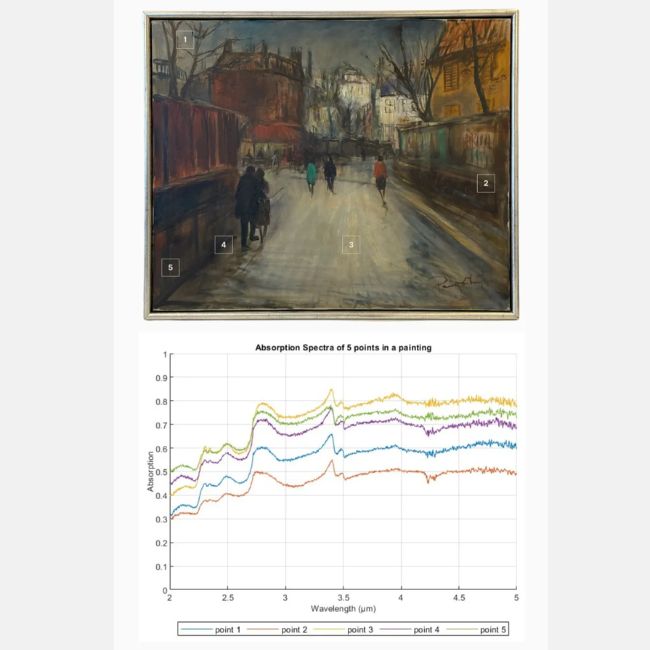 Mid-Infrared Spectroscopy for Art and Cultural Heritage
Mid-infrared (MIR) spectroscopy, as offered by NLIR, is a powerful analytical technique used in heritage science to identify and characterise materials based on their molecular composition. Unlike imaging alone, spectroscopy provides precise chemical information, enabling detailed understanding of the materials used in artworks and historical artefacts.
MIR spectroscopy works by detecting the unique vibrational “fingerprints” of molecules, allowing researchers to distinguish both organic and inorganic compounds with high specificity. This makes it particularly valuable for analysing complex materials such as pigments, binders, varnishes, oils, and resins, all of which play a critical role in the structure and preservation of cultural heritage objects.
A key advantage of NLIR’s technology is its ability to perform non-destructive measurements, allowing fragile and valuable samples to be analysed without physical sampling or damage.
MIR spectroscopy is especially suited to art and cultural heritage because it enables:
Accurate material identification – Differentiating complex chemical compositions, including organic and inorganic substances.
Analysis of degradation and ageing – Detecting chemical changes such as oxidation and material breakdown to support conservation decisions.
Understanding artistic techniques – Identifying binders (e.g. oils, egg tempera, gum Arabic) and pigments used in historical artworks.
Authentication and provenance studies – Comparing material composition across objects and time periods.
Pigment and binder identification – Determining the composition of paints and coatings in historic artworks.
Analysis of organic materials – Studying oils, resins, and conservation materials in paintings and artefacts.
Degradation and conservation studies – Assessing ageing processes and guiding restoration strategies.
Archaeological material analysis – Investigating substances used in historical practices (e.g. mummification oils and resins).
Raman and mid-infrared (MIR) spectroscopy are complementary techniques for material identification in art and cultural heritage. Raman measures scattered light and is especially effective for analysing inorganic pigments and crystalline materials, while MIR measures absorbed light and is more sensitive to organic compounds such as binders, oils, and varnishes.
Raman offers high spatial precision and minimal interference from water, whereas MIR provides strong molecular specificity and is particularly useful for studying chemical composition and degradation processes.
Used together, they provide a complete understanding of artworks, combining pigment identification with detailed analysis of organic materials and ageing.
Raman spectroscopy is a powerful, non-destructive analytical technique widely used in art conservation and cultural heritage science to identify and characterise materials at a molecular level. By measuring how light interacts with a material—specifically the inelastic scattering of laser light—Raman spectroscopy provides a unique molecular “fingerprint” for each substance, enabling precise identification without the need for sampling.
In art applications, Raman spectroscopy is particularly valued for its ability to analyse pigments, binders, corrosion products, and degradation compounds directly on the surface of an object. Because it requires minimal or no sample preparation and can be performed in situ with portable systems, it is ideally suited for examining fragile, rare, or immovable cultural artefacts.
Raman spectroscopy offers several key advantages for cultural heritage analysis:
Non-destructive and non-invasive – Allows direct examination of valuable artworks without removing samples or causing damage.
Highly specific material identification – Provides detailed molecular information, enabling accurate identification of pigments, minerals, and chemical compounds—even in complex mixtures.
Minimal sample preparation – Measurements can often be taken directly on the artwork surface, reducing handling and risk.
In situ and portable capability – Portable Raman systems enable analysis in museums, conservation studios, or archaeological sites.
Sensitive to both inorganic and organic materials – Suitable for identifying a wide range of substances used in artworks, from mineral pigments to organic dyes and binders.
Pigment identification and mapping – Determining the exact composition of pigments used in paintings, manuscripts, and polychrome objects.
Authentication and attribution – Identifying anachronistic materials or confirming historically accurate pigment use to support authentication studies.
Analysis of degradation and corrosion products – Detecting chemical changes caused by ageing, environmental exposure, or previous conservation treatments.
Study of artistic techniques and materials – Identifying binders, varnishes, and layering techniques used by artists across different periods.
Investigation of cultural artefacts and archaeological materials – Characterising minerals, ceramics, and residues without damaging the object.
Conservation and restoration support – Guiding treatment decisions by providing detailed knowledge of material composition and condition.
Raman and mid-infrared (MIR) spectroscopy are complementary techniques for material identification in art and cultural heritage. Raman measures scattered light and is especially effective for analysing inorganic pigments and crystalline materials, while MIR measures absorbed light and is more sensitive to organic compounds such as binders, oils, and varnishes.
Raman offers high spatial precision and minimal interference from water, whereas MIR provides strong molecular specificity and is particularly useful for studying chemical composition and degradation processes.
Used together, they provide a complete understanding of artworks, combining pigment identification with detailed analysis of organic materials and ageing.
Raman spectroscopy is often used alongside techniques such as multispectral imaging, hyperspectral imaging, SWIR imaging, and infrared spectroscopy, providing complementary molecular-level information. While imaging techniques reveal spatial and structural features, Raman analysis delivers precise chemical identification, making it an essential tool for comprehensive, non-invasive investigation of artworks.
 Spectroradiometery for Art and Cultural Heritage
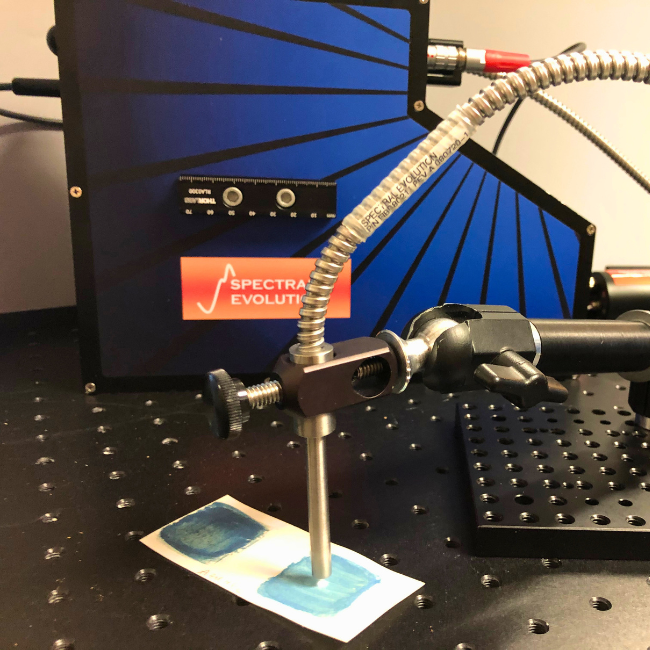
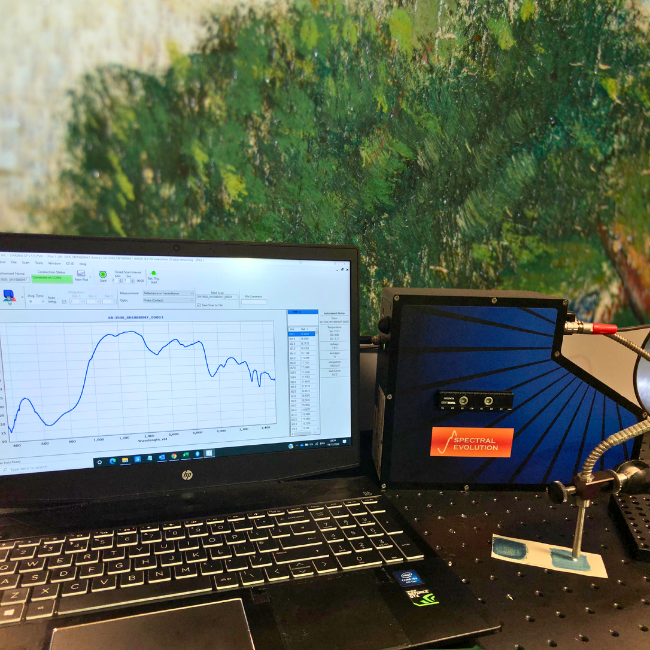
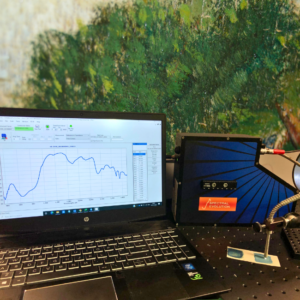
Spectroradiometers are advanced, non-destructive analytical tools increasingly used in art conservation, cultural heritage science, and technical art history. By measuring the reflectance properties of materials across a broad spectral range, these instruments provide detailed insight into the composition, condition, and alteration of artworks without requiring sampling. Operating across the visible and near-infrared regions—and in some cases extending into the shortwave infrared—spectroradiometers enable precise, point-based analysis of pigments, binders, and surface treatments. We offer high-performance spectroradiometer solutions from Spectral Evolution, a company recognised for developing robust, field-ready instruments tailored to demanding analytical environments. Their systems combine high spectral resolution, wide wavelength coverage, and portable design, making them particularly suitable for use in museums, galleries, conservation studios, and in situ heritage investigations. Spectral Evolution instruments provide comprehensive spectral measurement capabilities. These systems typically operate across a wide spectral range (approximately 350–2500 nm), enabling detailed material characterisation beyond the limits of standard imaging techniques. When paired with specialised accessories such as the Art Probe, they offer an integrated, user-friendly solution for precise, repeatable reflectance measurements directly on artworks.
Spectroradiometers are particularly valuable in cultural heritage because they provide non-contact, non-invasive, and highly precise spectral data, ensuring that fragile and irreplaceable objects remain unharmed during analysis. Unlike imaging systems, which provide spatial information across a surface, spectroradiometers deliver high-resolution spectral signatures at specific points on the surface , allowing for accurate material identification and comparison with reference databases. The combination of broad spectral coverage and fine spectral resolution makes these instruments especially powerful for distinguishing between similar pigments, identifying degradation products, and analysing layered or complex materials. While point-based measurements require more targeted investigation than imaging methods, they provide greater analytical depth, often serving as a complementary technique to multispectral or hyperspectral imaging.
Pigment identification – Precisely identifying pigments by comparing measured spectral signatures with reference libraries.
Material differentiation – Distinguishing between visually similar materials that differ in spectral response, such as natural vs. synthetic pigments.
Detection of retouching and overpainting – Identifying areas where restoration materials differ from original components.
Degradation and ageing studies – Monitoring chemical and physical changes in materials over time.
Analysis of binders and coatings – Investigating varnishes, glazes, and protective layers, particularly in the near- and shortwave infrared regions.
Authentication and provenance research – Supporting the identification of anachronistic materials or undocumented interventions.
Reference database development – Building spectral libraries for historical pigments and materials used in different periods or regions.
Complementary analysis with imaging techniques – Providing point-based validation and detailed spectral data to support multispectral and hyperspectral imaging results.
 Light Measurement Instruments for Art Applications
Light measurement instruments such as illuminance meters (lux meters), luminance meters, colorimeters, spectroradiometers, imaging photometers, and flicker meters are essential, non-invasive tools widely used in art conservation, museum lighting design, and cultural heritage management. These devices provide precise and reliable measurements of light intensity, spatial distribution, visual appearance, colour, and spectral characteristics, enabling professionals to control and optimise lighting conditions for both the preservation and presentation of artworks.
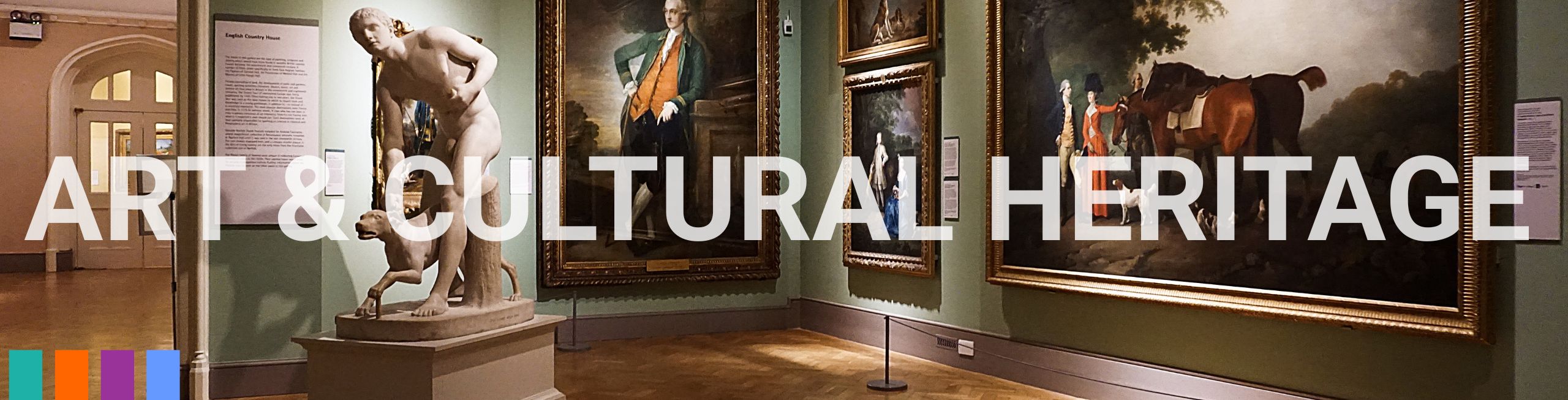
Poor lighting (as shown in the image)—such as uneven illumination, excessive intensity, or poorly positioned fixtures—can create harsh glare, bright hotspots, and deep shadows that obscure detail and reduce visual clarity. It can also contribute to long-term material degradation if exposure is not properly controlled. Imaging photometers are particularly valuable in this context, as they visualise and quantify luminance distribution across an entire scene, making issues such as hotspots and non-uniform lighting immediately visible and measurable. By quantifying how light interacts with objects and how it is perceived by the human eye, light measurement instruments help to avoid these issues, supporting informed decision-making that balances conservation requirements with clear, consistent, and high-quality presentation.
We offer advanced light measurement solutions from Konica Minolta, International Light, Jeti, and Westboro Photonics, leading manufacturers known for their accuracy, reliability, and application-focused design. Their instruments are widely used in museums, galleries, conservation studios, and lighting laboratories, providing trusted performance for both routine monitoring and high-precision analytical work.
Light measurement systems primarily operate across the visible spectrum (approximately 380–780 nm), with many instruments extending into UV and near-infrared regions, which are critical for assessing potential light-induced damage. These systems provide key parameters such as illuminance (lux), luminance (cd/m²), chromaticity, colour temperature, spatial luminance distribution, and spectral power distribution, enabling comprehensive characterisation of lighting environments and their impact on artworks.
Light is one of the primary factors contributing to the long-term degradation of artworks, particularly for light-sensitive materials such as paper, textiles, dyes, and organic pigments. Illuminance meters (lux meters) allow conservation professionals to quantify incident light levels, ensuring that exposure remains within recommended limits and helping to minimise fading, discolouration, and irreversible material damage.
Luminance meters complement this by measuring the light reflected from the artwork, which directly influences how objects are perceived by viewers. Imaging photometers extend this further by providing spatially resolved luminance maps, allowing professionals to assess uniformity, detect glare, and optimise lighting design across the entire artwork or display. This is particularly important in identifying issues such as localised overexposure or uneven illumination that may not be detected with point measurements alone.
Colorimeters and spectroradiometers provide detailed colour and spectral information, enabling accurate assessment of light source quality and its effect on the appearance of artworks. These measurements support the evaluation of parameters such as colour rendering, correlated colour temperature (CCT), and spectral distribution, ensuring that lighting enhances, rather than distorts, the artist’s intent.
Flicker meters add an additional layer of analysis by detecting temporal light modulation in modern lighting systems, particularly LEDs. Although flicker is not always visible, it can affect both visual comfort and the accurate perception of artworks, and is increasingly considered in museum lighting standards.
All of these techniques are non-contact, fast, and repeatable, making them ideal for routine monitoring, documentation, and long-term collection care.
| Instrument Type | What It Measures | Key Functions | Typical Applications in Art |
|---|---|---|---|
| Illuminance Meters (Lux Meters) | Light falling onto an artwork (illuminance, lux) | Quantifies incident light levels | Controlling light exposure to meet conservation guidelines; monitoring galleries and storage environments |
| Luminance Meters | Light reflected from the artwork toward the viewer (luminance, cd/m²) | Measures perceived brightness and visual appearance | Assessing display visibility and contrast; evaluating viewing conditions |
| Imaging Photometers | Spatial distribution of luminance across a scene | Produces luminance maps; detects glare, hotspots, and non-uniformity | Analysing uneven lighting; optimising exhibition design; documenting lighting performance; diagnosing visual issues like those shown in the image |
| Colorimeters | Colour characteristics of light and illuminated surfaces | Measures chromaticity, colour temperature, colour consistency | Evaluating lighting quality; ensuring consistency across displays; supporting exhibition design; monitoring lighting changes |
| Spectroradiometers | Full spectral power distribution of light (high-resolution) | Detailed spectral analysis; advanced colour metrics (CRI, TM-30); UV/blue light detection | Evaluating LED and museum lighting; analysing light that may cause degradation; calibration and validation of lighting systems; research-grade analysis |
| Flicker Meters | Temporal light variation (flicker) | Detects fluctuations in light output over time | Identifying invisible flicker in LED systems; ensuring compliance with standards; supporting stable viewing conditions; evaluating lighting for imaging and photography |
Spectral imaging is a non-invasive technique that captures information beyond visible light to reveal hidden details in artworks. It is used to uncover underdrawings, analyse pigments, detect restorations, and support conservation decisions without damaging the object.
Multispectral imaging captures a limited number of wavelength bands for fast and practical analysis, while hyperspectral imaging collects hundreds of narrow bands, enabling precise material identification and advanced research. Both techniques are complementary in cultural heritage workflows.
Non-invasive methods allow conservators and researchers to study fragile and valuable objects without taking samples or causing damage, ensuring the long-term preservation of artworks and historical artefacts.
SWIR imaging allows users to see beneath the surface of artworks, revealing underdrawings, hidden features, and compositional changes. It also enhances contrast between materials that look similar in visible light.
Raman spectroscopy is used to identify pigments, minerals, and other materials at a molecular level. It is particularly effective for analysing inorganic compounds and supports authentication and conservation studies.
MIR spectroscopy is especially useful for analysing organic materials such as binders, varnishes, oils, and resins, while Raman is typically better suited for inorganic pigments. Together, they provide a complete understanding of material composition.
Yes, many modern systems are portable and designed for in situ analysis, allowing measurements to be performed directly in museums, galleries, archives, or archaeological sites without moving the object.
While some techniques (e.g. hyperspectral imaging or spectroscopy) benefit from training, many systems are designed with user-friendly software and workflows, enabling conservators and researchers to quickly acquire and interpret data.
These technologies can be applied to a wide range of materials, including:
The best solution depends on your specific needs:
Pro‑Lite Technology can help you select the most suitable system based on your application and workflow.
Yes, spectral imaging and spectroscopy can reveal inconsistencies in materials, detect later additions, and identify pigments not consistent with a claimed period, supporting authentication and attribution studies.